The Wearable That Disappears
A few months with the Oura ring, and the honest verdict isn't a number — it's that I still wear the thing. I've abandoned every watch I ever bought; this is the first tracker small enough that I stopped noticing it. Plus why the smaller new Oura 5 makes the point louder.
I hate wearables. Not philosophically — physically. Watches feel like a shackle. I have never worn a necklace, a bracelet, or anything that sits on my skin and asks to be noticed. Over the years I bought Apple Watches more than once, each time sure this would be the time it stuck. Each time it was back in a drawer within a week.
So the honest headline of my recap isn't in the numbers. The stats are in the video above. The only result that matters after a few months isn't in the app at all: I have worn this ring 24 hours a day, every single day, for months — and I keep forgetting it's on my hand.
I quit every wearable I've owned
The problem with wrist wearables was never the data. It was the wrist. A watch is a constant, low-grade presence — I feel it while I type, I feel it while I sleep, and eventually I take it off "just for tonight" and never put it back on. A tracker in a drawer tracks nothing. Adherence is the whole game, and every device I tried lost on adherence long before it lost on features.
A few months ago I wrote about why I chose the Oura Ring 4 — the reasoning, the tradeoffs, what I wanted out of it. That piece was the decision. This one is the verdict. And the verdict came down to something no spec sheet lists.
The ring I forget I'm wearing
It's small. That's the feature. That's the whole thing.
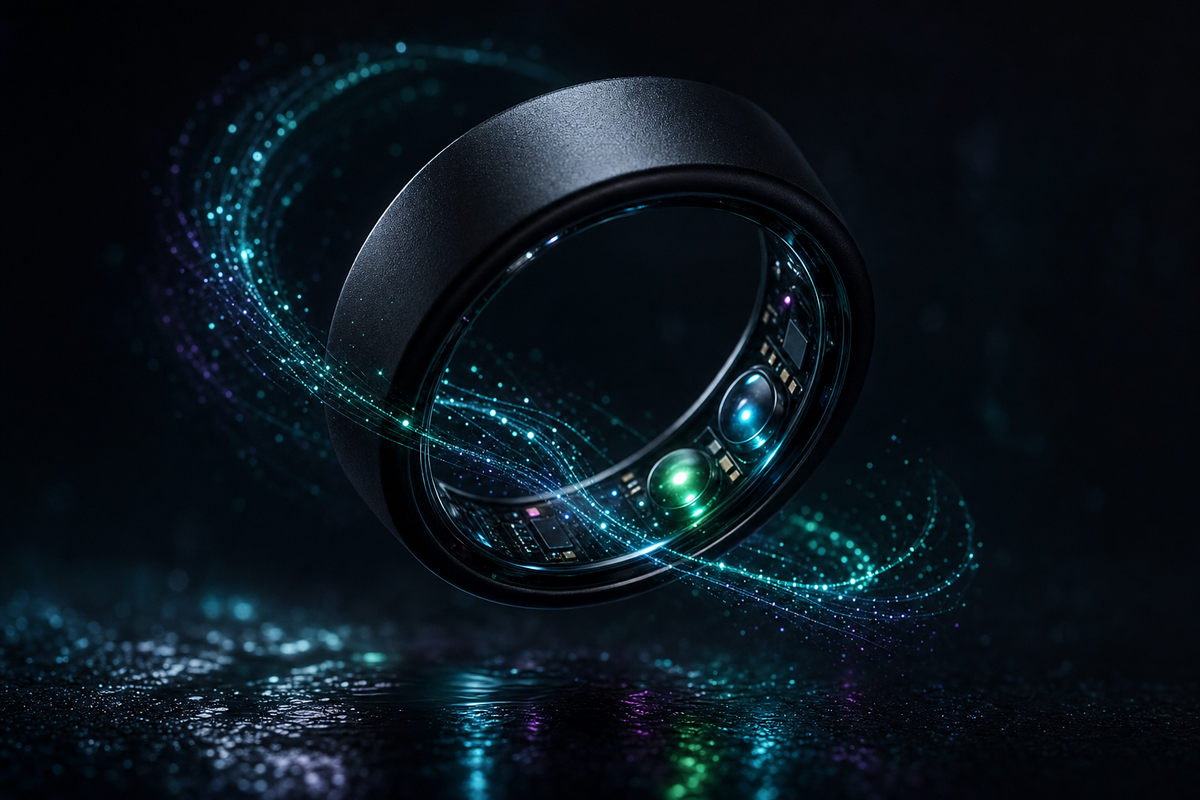
It's a band of titanium that weighs almost nothing, sits flush on a finger, and vanishes. I shower with it. I train with it. I sleep with it — and sleep is exactly where every watch I owned failed, because I flat-out refuse to sleep with something strapped to my wrist. The ring I don't notice. No screen demanding attention, no buzz on my arm, no nightly negotiation about whether I can be bothered. I put it on, and then I stopped thinking about it. For someone who has abandoned every gadget he ever clipped to his body, that is the entire success story.
Charging is the only time it comes off — twenty-odd minutes on a little dock while I'm at my desk — and then it goes back on and disappears again.
It isn't flawless, and I'd be lying to call it that. The full app lives behind a subscription, so the ring is the down payment and the insights are the rent. The titanium picks up hairline scratches if you train or work with your hands — mine has a few. And there's no screen, so the moment you actually want to look at something you're reaching for your phone anyway. None of it has come close to sending the ring to the drawer — which is the bar every other device failed to clear.
Why that beats any feature
Continuous health data has one hard requirement nobody prints on the box: you have to actually wear the thing. All day. Overnight. On the boring days and the busy ones. The most accurate sensor in the world measures nothing from a nightstand.
Most biohacking doesn't fail at the biology. It fails earlier, at adherence — the plan you drop, the habit you skip, the tracker in the drawer. Oura didn't win by measuring more than the watch did. It won by asking less of me.
So the form factor isn't a nice-to-have — it is the product. A device you forget you're wearing builds a complete picture. A better device you resent gives you a week of data and then nothing. I never needed the tracker with the most features. I needed the one I'd never take off, and it turned out to be the one I can't feel.
And now it disappears even more: Oura Ring 5
Which makes the timing of the new one almost funny. In May, Oura announced the Oura Ring 5, and it leans on the exact lever that made this work for me: it's smaller. Oura calls it the world's smallest smart ring — around 40% smaller than the Ring 4, about 2.28mm thick, as light as roughly 2 grams, fully titanium, and rated for six to nine days on a charge.
Oura also announced new software alongside it, much of it rolling out to older rings too. That will get the headlines. For me the headline is the millimeters. I'm still on the Ring 4, and it already disappears; the Ring 5 is making the same bet, only harder — less bulk, less friction, less to notice. Being unnoticeable, not the spec list, is the whole reason it stays on my hand. It starts at $399.
Would I run out and upgrade? Not for the feature list — my Ring 4 already vanishes, and this recap isn't about chasing numbers. But if size and friction are the only things standing between you and actually wearing one, that's the exact bottleneck the Ring 5 goes after.
The point
I am not the guy who wears gadgets. I've proven it over and over, one abandoned watch at a time. The single exception is a ring I forget is there — and that, more than any chart, is why it works. I thought I was buying a tracker. What I actually bought was the one gadget that finally stuck — the thing every device before it couldn't sell me. The best wearable isn't the one with the most sensors. It's the one you'll actually wear. For months now, for the first time, that's been true for me.
Why I Chose the Oura Ring 4 for Biohacking. The decision behind the ring — the reasoning and the tradeoffs. This recap is the verdict on it. Read it →