Human Language Is the Best Programming Language
Natural language can help express software requirements, but generated prototypes still need engineering verification before deployment.
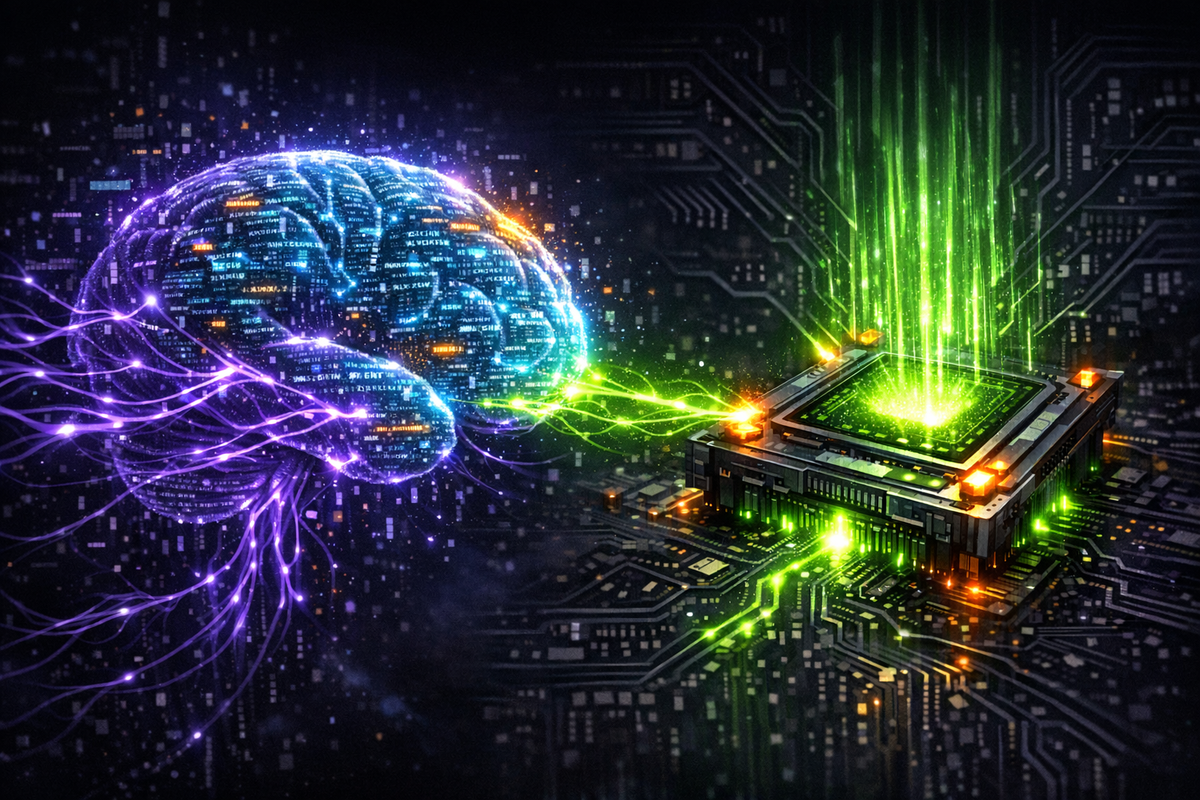
Natural-language interfaces are changing how people express software requirements. NVIDIA is a major supplier of AI accelerators; AI systems also use other accelerators and CPUs.
The proposition worth examining is that human language can become a more accessible interface for directing software creation.
Consider an illustrative request: prepare a build plan from a supplier list and material requirements, then produce editable code for the calculation. This example is not a verified quotation from a particular talk.
A conversation can replace some manual interface work. Generated code can still contain syntax errors, incorrect assumptions and deployment problems.
Natural Language as an Interface
NVIDIA helped make accelerated AI computing widely available. That role does not mean every model request runs on its GPUs, or that hardware alone determines the quality of an AI-assisted workflow.
The argument here is about the interface to computing: AI models can translate some natural-language requirements into executable software, while processors and established software tools still do the underlying work.
Natural language can make parts of programming more accessible. It does not eliminate formal representations, toolchains or the need to verify what the system builds.
From Syntax to Semantics
For decades, programming meant learning arbitrary rules. Where to put the semicolons. How to declare variables. Which brackets to use. We spent years mastering syntax — the how of telling computers what to do — when what always mattered was the what and the why.
The example starts with a desired outcome and constraints rather than a particular loop or data structure.
The input is different, and the result must still be checked. Two descriptions of an intention do not guarantee equivalent implementations.
The Artistry
There is an element of craft in making an intention precise: choose constraints, examples and acceptance criteria that another person or system can test.
Prompt engineering isn’t just typing words at a chatbot. It’s the discipline of translating fuzzy human intent into precise instructions that an AI can execute. Knowing when to be specific and when to let the model think. Understanding what context to provide, what constraints to set, and what to leave open.
The difference between “make me a website” and “build a single-page portfolio with a dark theme, three sections, mobile-first, deployed on Vercel” — that gap is engineering. One is lazy. The other is precise.
This is the new literacy. Not knowing Python or JavaScript — but knowing how to think clearly enough to tell a machine what you actually want.
The Wall Is Crumbling
For decades, there was a hard wall between people who could create software and people who couldn’t. Learn to code — years of study, practice, frustration — or stay locked out.
That wall is crumbling.
A supply-chain planner might prototype an optimization tool, or a teacher might prototype an interactive exercise. These are illustrative possibilities, not measured delivery-time claims. Production deployment still requires verification, access controls and maintenance.
Domain experts can become more active participants in software creation. Understanding the problem is essential, and engineering judgment remains necessary to establish that the implementation solves it.
The possibility is a change in how people direct computers: more intent can be expressed in familiar language. Whether that produces useful software still depends on the requirements, available tools and engineering checks.
Already Here
Human language is my preferred starting point for expressing software intent, even though it is ambiguous. Current AI systems can turn some instructions into software or tool actions; the results still need verification.
The most valuable programming language you can master is the one you already speak.