
The Last Interface
A speculative exploration of neural interfaces, separating demonstrated assistive control from unproven thought-to-software capabilities.
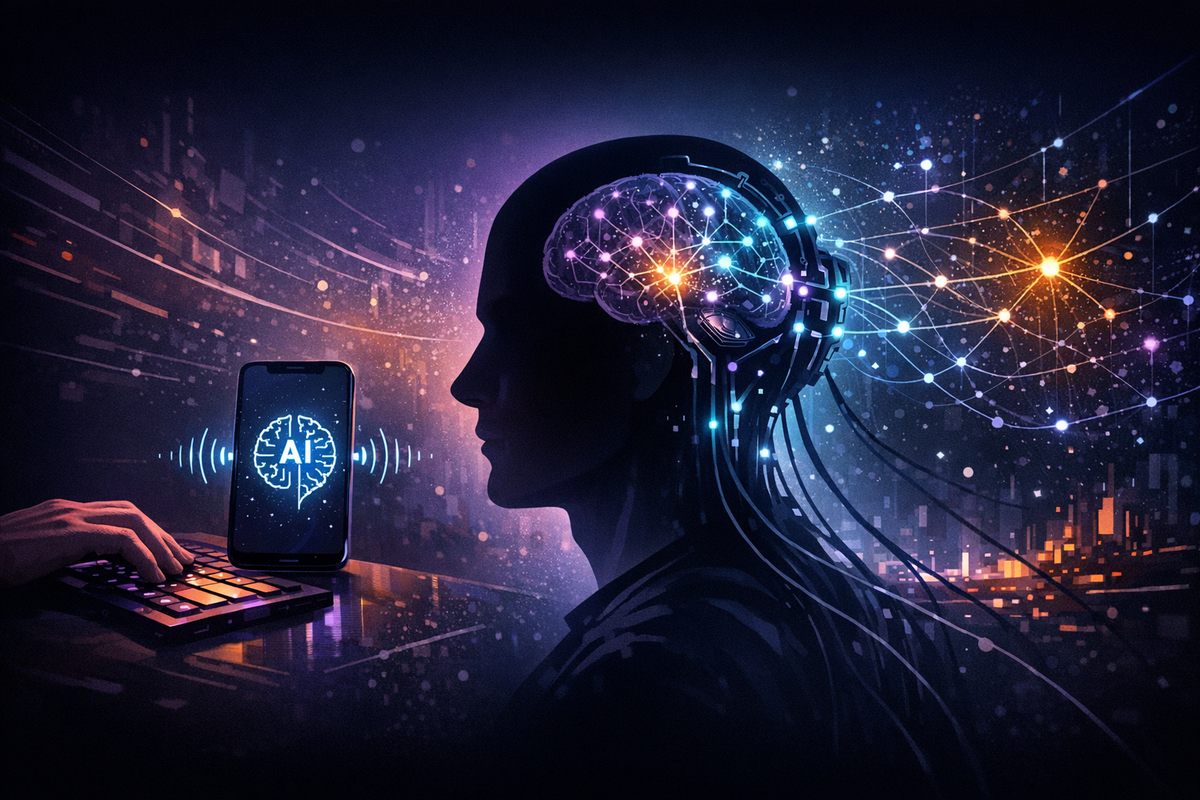
A phone can now control an AI coding agent running on a workstation. The interface between a request and the development environment keeps getting thinner.
The interface between human intention and machine execution keeps getting thinner. We typed commands into terminals. Then we talked to assistants. Then we tapped a link on a phone and controlled a coding agent from another room. Each step removed friction. Each step brought the machine closer to the thought.
One speculative direction is a neural interface, though it may never replace conventional controls.
The Progression
2023: Copy-paste code from ChatGPT into your editor. Hope it compiles.
2024: AI assistants autocomplete your lines. You're still typing.
2025: Claude Code runs in your terminal. You describe what you want. It reads the codebase, writes the code, runs the tests. You review.
2026: You type /rc and control your AI agent from your phone. You build from anywhere.
A possible future: selected neural signals become deliberate, confirmed commands.
That is a hypothesis to investigate, not a demonstrated path to general thought-to-software translation.
The Bridge
Investigational brain-computer interfaces have demonstrated tasks such as cursor control. Authorization to conduct a clinical trial is not general product approval, and a specific demonstration does not establish broad mind-reading or software-design capabilities.
Expressing intent is one bottleneck; understanding requirements, validating code and integrating systems are others. Faster input alone does not solve them.
A future interface might help express selected intentions through decoded neural signals. Directly transmitting a complete software architecture without ambiguity is speculation; current cursor or typing demonstrations do not show that capability.
There would still be translation: sensors, decoding models, feedback and error correction. The design challenge is making that process useful and controllable.
Sounds amazing. And that's exactly what worries me.
The Part That Keeps Me Up
If an interface processes neural signals, its design must specify what is collected, where it is processed and how consent works. That does not mean it can read arbitrary thoughts.
A speculative consent question is how a future system would distinguish a deliberate command from an ambiguous signal. This is a design problem to investigate, not evidence that current systems can decode arbitrary subconscious thoughts.
An adoption question is whether a new interface would create pressure to use it. Access, choice and accessibility would matter; refusing a particular tool is not proof of professional inadequacy.
A design should leave space between an emerging idea and an executed action. Preview, confirmation and reversible stages may help preserve that distinction; instantaneous materialization of every thought is a speculative premise.
Dependence on an external assistant raises continuity questions. An outage could remove assistance, but it does not establish that ordinary thought would stop or biologically degrade.
Both Futures, Same Timeline
The thing is, I'm not a pessimist. I genuinely believe neural-AI interfaces will let us build things we can't currently imagine. The creative potential is staggering.
Assistive benefits and infrastructure dependence can coexist. The scale of future productivity gains is unknown; no 100× engineering multiplier follows from the clinical demonstrations discussed here.
Every technology in history has been this way. Fire warms and burns. The internet connects and isolates. AI creates and displaces.
A neural interface could make familiar trade-offs more intimate. Whether such systems become useful and widely adopted remains uncertain.
The last interface isn't a device. It's a question we haven't answered yet.
Reference: Neuralink PRIME study user-experience update (documentation checked 20 September 2026).