Mythos on a Federal Leash

Anthropic spent two months telling the world Mythos was too dangerous to release. Friday at 5:21 PM, the US government took it literally — and export-controlled Fable 5 and Mythos 5 out of reach for every non-American on earth. It smells coordinated. It's worse: a prophecy Anthropic wrote itself.

Mythos on a Federal Leash — AI

At 5:21 PM Eastern on Friday, June 12, a letter arrived at Anthropic. Just over four hours later, at 6:59 PM Pacific, Simon Willison's monitoring script hit a 404 where Claude Fable 5 used to answer. He had spent the better part of a week putting the model through its paces. His one-word verdict on the shutdown: "absurd." It is the correct technical term.

Three days. That is how long Fable 5 and Mythos 5 — Anthropic's two newest and most capable models, a tier above Opus 4.8 — survived in public before the US government switched them off. Not a recall over a bug Anthropic found. An export-control directive: the legal instrument built to keep missile guidance and lithography machines out of the wrong hands, aimed for the first time at a commercial language model already sitting in hundreds of millions of them. It will not be the last time.

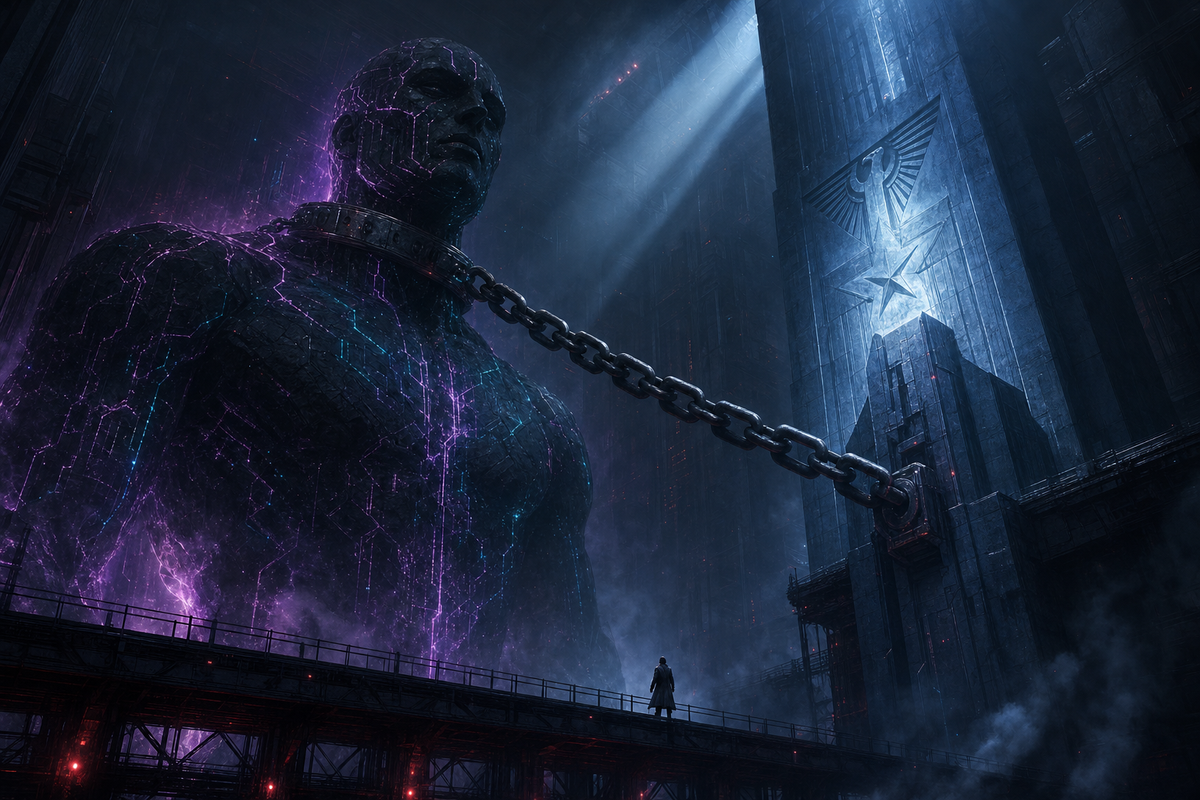
If you read last week's piece, you know I called Fable 5 "Mythos on a leash" — the dangerous model shipped to the public behind a safety classifier, pre-wrapped as a "Covered Model," packaged for the regulatory era. I did not expect the leash to go federal in seventy-two hours.

What actually happened

The directive came from Commerce — Secretary Howard Lutnick, through the Bureau of Industry and Security — citing national-security authorities. It bars Fable 5 and Mythos 5 from any foreign national: outside the US, inside the US, and — the detail that tells you how blunt the instrument is — including Anthropic's own foreign-national employees — and, since the directive carves out no allied exception, nationals of the UK, Canada, Australia, and New Zealand. The people you share signals intelligence with don't clear the bar for a ten-dollar-per-million-token chatbot.

Anthropic can't check your passport between prompts. So to comply, it did the only thing it could: it took both models offline for everyone. Opus 4.8 and the rest of the lineup stayed up. The flagship went dark.

The stated trigger is a jailbreak. According to White House AI czar David Sacks, "a highly credible, trusted partner of both Anthropic and the U.S. government who was testing Fable came forward with a jailbreak" — a way past the classifier that was supposed to gate Mythos-class cyber capability. Sacks says Anthropic "prioritized the continued offering of the consumer model over safety," that the administration "did this reluctantly," and that the company's defiance "is very much at odds with their branding and ethos as a safe AI research community."

Anthropic's response is a study in restrained fury. It calls the whole thing "a misunderstanding," says the jailbreak is narrow and non-universal, points out that the same capability is "widely available from other models (including OpenAI's GPT-5.5)" and used every day by the defenders who keep systems safe, and notes that the letter "did not provide specific details of its national security concern." Then the line that is really a warning shot: "If this standard was applied across the industry, we believe it would essentially halt all new model deployments for all frontier model providers." Hold that thought — they are right, and being right is exactly the problem.

DateWhat happened
Apr 7, 2026Anthropic reveals Claude Mythos — it finds zero-days and writes the exploits — and withholds it as too dangerous to release. Project Glasswing launches with ~50 vetted defensive partners.
Apr 21, 2026Sam Altman calls it "fear-based marketing": "We have built a bomb... we will sell you a bomb shelter for $100 million."
Jun 2, 2026Glasswing expands to 150 organizations across 15+ countries; 10,000+ critical vulnerabilities found and reported.
Jun 9, 2026Fable 5 (public, guard-railed) and Mythos 5 launch. Fable is a "Covered Model" with an auto-fallback to Opus 4.8.
Jun 12 — 5:21 PM ETCommerce / BIS export-control directive bars all foreign nationals — Five Eyes and Anthropic's own staff included. Unable to filter, Anthropic disables both models for everyone. 6:59 PM PT: a 404.

This smells coordinated

Here is the instinct a lot of people had, including me: this is too perfect. A safety-first lab that has spent years insisting its models are world-endangering just had one treated as world-endangering by the federal government — three days after launch, weeks before a reported mega-IPO. The most powerful validation the brand could ask for, stamped by the one institution whose word outweighs any benchmark. It looks staged. Two credible camps point in opposite directions, and both have receipts.

Camp one — it's a marketing play that finally cashed out. The skeptic read isn't fringe; it's the competition's official position. On April 21, on Ashlee Vance's Core Memory podcast, Sam Altman called Anthropic's handling of Mythos "fear-based marketing": "It is clearly incredible marketing to say, 'We have built a bomb. We were about to drop it on your head. We will sell you a bomb shelter for $100 million.'" The timeline rewards the cynic. Anthropic revealed Mythos on April 7 as a model too dangerous to release — one that finds zero-days and writes its own exploits — and stood up Project Glasswing to run it against critical software with a few dozen vetted partners. By June it had widened Project Glasswing to roughly 150 more organizations across more than fifteen countries, and reported finding more than ten thousand critical vulnerabilities. The "too dangerous for you, available to the right customers" narrative was two months in the oven before the export control proved it for free.

Camp two — it backfired, against a government that despises them. Sacks has publicly branded Anthropic "woke," "leftist," and accused it of "a sophisticated regulatory capture strategy based on fear-mongering." This spring the company was in an open fight with the Pentagon; Amodei has rebutted the White House using JD Vance's own words; Reid Hoffman is out calling Anthropic "one of the good guys"; a House Democrat called the move an "attack." You do not engineer a crisis whose first responders are the opposition party. And the damage is real and asymmetric — locked-out foreign staff, a kneecapped international business, an IPO spooked days before pricing. A stunt doesn't bar your own London engineers from the product they built.

Both camps are half right. The synthesis is sharper than either.

The prophecy

This isn't 4D chess. It's a self-fulfilling prophecy, and Anthropic wrote the script.

You don't need coordination when the incentives are this aligned. Anthropic authored a story in which its model is a weapon — for two months, in press release after press release: this finds zero-days, this is too dangerous to release, we are its responsible custodians. When you spend that long insisting your product is a munition, you should not be shocked when the government reaches for the munitions playbook. Export controls are the genre Anthropic chose. A "trusted partner" — read: a rival with motive and a demo — walked a jailbreak into Commerce. A government that already resented the company picked up the nearest lever marked dangerous dual-use technology and pulled it. Nobody had to coordinate. Everyone is performing the role Anthropic's own marketing assigned them.

That is why it feels engineered even as it actively hurts the business. The outcome is narratively perfect — "the US government classified our AI as too dangerous for foreign hands" is the platonic ideal of safety-as-moat — while being commercially self-inflicted. The marketing-skeptic read and the it-backfired read are not contradictory; they are describing one feedback loop. The con and the catastrophe are the same event seen from two ends. Anthropic talked itself into a category, and the category came with a legal off-switch attached.

The precedent is the real story

Strip away the palace intrigue and one fact survives, bigger than any IPO: a single letter, sent at 5:21 on a Friday afternoon, switched off a consumer model for every non-American on earth — over a vulnerability the vendor says is already everywhere, in a document that didn't bother to explain itself.

"Covered Model" was a regulatory metaphor on Tuesday. By Friday it was a kill command. The lever now exists, it has been demonstrated, and bureaucracies do not un-learn capabilities. Once Commerce has established that export-control authority reaches a deployed model, that reach is permanent and reusable — and the bar that triggered it, "a partner reported a jailbreak," describes every frontier model that has ever shipped. The next lab to feel it might not have Reid Hoffman and half of Congress ready to push back.

The rest of the world did the math within hours. The reaction out of India and elsewhere was some version of "sovereign AI is real" — Zoho's Sridhar Vembu and others pushing on-prem and multi-model hedging as strategy, not paranoia. They are early, not wrong. The Five Eyes lockout is the tell: this isn't really about adversaries when allied nationals get cut off too. Jurisdiction beats alliance. If the most capable models can be revoked for your citizens between a Friday and a Monday, depending on them is a liability you can't price and can't insure — and the United States just made that argument on everyone else's behalf.

The operator's cut

Last week the takeaway was route, don't marry — on price, latency, and quality. June 12 adds a column nobody was pricing: jurisdiction.

If a government letter can null-route your model between two API calls — and as of Friday that is empirically true — then you never owned access to it. You were renting it from a vendor who was, in turn, renting it from a regulator's forbearance. Anything you build that has to keep running cannot be married to a single frontier model, not because it might get worse but because it might get recalled. A model-agnostic abstraction layer, real fallbacks, an exit you have actually tested: that stopped being hygiene and became continuity.

And here is the irony that should keep an architect up at night. Anthropic shipped Fable 5 with an auto-fallback to Opus 4.8 — a safety feature, the classifier that demotes you to the smaller model on dicey requests. That exact mechanism is now the template for business continuity. Safety fallback and political fallback turn out to be the same engineering problem. Whoever already wired a degrade-gracefully path for capability reasons woke up Saturday with a regulatory hedge for free. The teams that treated Fable as one swappable lane shrugged and routed around a dead model. The teams that treated it as the foundation woke up to a 404.

Hot takes

  1. The Five Eyes lockout is the part nobody can spin. You can argue national security against China with a straight face. You cannot explain why a Canadian can't use a chatbot that is freely serving Americans.
  2. "We built a bomb and we'll sell you the shelter" is great positioning — right up until the customer it convinces is the Commerce Department.
  3. A model that writes zero-day exploits doesn't have a safety on it. It has a customer list. The moment you concede that, you've conceded the export-control framing, kill switch included.
  4. Anthropic's strongest defense — this capability is already in GPT-5.5 — is also a quiet admission that the moat it marketed for two months was never as wide as the marketing.
  5. The first commercially deployed AI model the US export-controlled wasn't an open-weights release out of China. It was an American lab's own product, three days after launch. Read that twice.
  6. "It would halt all new model deployments if applied industry-wide" is Anthropic arguing that its own safety standard is unshippable — and unworkable standards get enforced selectively, which is to say politically.
  7. Whoever the "trusted partner" was that walked the jailbreak into Washington ran the only genuinely coordinated play in this whole story. It wasn't Anthropic's.

The leash was always real. That was the whole thesis last week: Fable 5 was Mythos with a hand on its collar, and the architecture was the hand. This week we learned the collar had a second loop, and the government was holding it the entire time.

The "too dangerous to release" story was the best marketing in AI — right up to the moment its most powerful reader believed every word. Anthropic got exactly the validation it asked for. Now it is filing paperwork to get its own product back.

📖
Related Reading

Fable 5: Mythos on a Leash — last week's piece: why Fable was Mythos shipped behind a classifier, and why the architecture is routing.

Opus 4.8 Would Rather Tell You It Failed — the reliability release underneath all of this, and the model the classifier falls back to.

Two Models, One Branch — route, don't marry: the multi-model discipline that just acquired a legal dimension.
💬
Working with a team that wants to adopt AI-native workflows at scale? I help engineering teams build this capability — workflow design, knowledge architecture, team training, and embedded engineering. → AI-Native Engineering Consulting