Two Models, One Branch
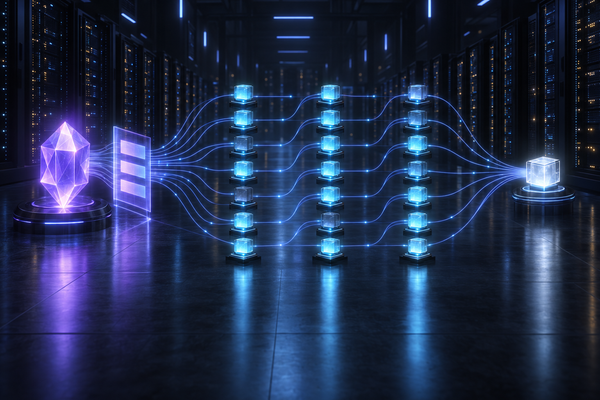
Two models on one branch. Claude writes the code and ships the PR; Codex reviews with fresh eyes. No agent framework, no MCP plumbing — just one CLI call from inside the editor. The simplest agent orchestration that actually works.

A fresh reviewer can catch assumptions the author carries into a change. That is the value of peer review: a separate examination of the same requirements and implementation, with enough context to test the author’s conclusions.
The same principle is useful for AI-assisted development. Self-review can help, but a fresh context or a different model may find other errors. Neither separation nor agreement establishes statistically independent failure modes.
The fix is unsexy and one CLI call long: when Claude finishes a change, hand the diff to a different model running in a different process. Then read what comes back and apply the parts that matter.
The setup
Two pieces, no agent framework:
The writer implements the change, runs the relevant tests and prepares a reviewable diff. This example uses Claude Code, but the handoff does not depend on a particular writer model.
The reviewer uses a separate context and a constrained tool policy. The following illustrative Codex configuration uses a read-only sandbox; choose a supported model and reasoning setting explicitly.
model = "gpt-6-astra"
model_reasoning_effort = "ultra"
approval_policy = "never"
sandbox_mode = "read-only"
The reviewer’s intended role is not a permission boundary. Restrict tools and credentials to the evidence it needs, because repository text can contain untrusted instructions. Approval policy never means a required approval will not be granted; it does not make otherwise forbidden actions permitted. Capture the answer through the controller rather than granting broad write access.
The handoff
Claude Code's slash command system makes the bridge trivial. A skill file at .claude/commands/codex-review.md defines the trigger phrases ("do codex review", "second opinion from codex", "/codex-review") and the workflow steps. When the user types any variant, Claude composes a focused review prompt and runs:
codex exec \
  --model gpt-6-astra \
  -c 'model_reasoning_effort="ultra"' \
  -c 'approval_policy="never"' \
  --sandbox read-only \
  --output-last-message "$OUT" - < "$PROMPT"
Put the complete review brief in PROMPT, including the exact base and head revisions, the diff and the requirements. Reading a file through stdin avoids shell interpolation of the prompt. Heredocs are another valid stdin mechanism; this example does not imply that multiline prompts inherently hang the CLI.
The controller starts a fresh process, checks its exit status and captures the final answer in OUT. Retain the model configuration and exact input revision with the report. Review duration depends on the workload; a completed model invocation is not proof that the change is correct.
No MCP server. No HTTP plumbing. No agent framework with role definitions and inter-agent message buses. Just two CLIs and a markdown file as the contract between them.
The format
Require each finding to state severity, the exact file and lines, triggering conditions, failure behavior, impact and a proposed correction.
Where a CLI handoff fits
Agent frameworks can help with complex state and coordination. A one-shot review handoff may need only a defined input, a separate review context and a structured result.
Choose the orchestration mechanism that makes those boundaries easy to inspect. A framework and a shell controller can both preserve separate contexts; neither creates independence by its name.
- A fresh review context receives complete authorized evidence.
- The input identifies requirements and exact revisions.
- The result identifies concrete failures and supporting reasoning.
- The accountable reviewer verifies findings before deciding.
One CLI call and a report file can provide that interface for a bounded task. A more complex workflow may justify queues, persistent state or another orchestration system. Evaluate that complexity against actual requirements.
A different model or provider can add diversity, but correlated errors remain possible. Ask the reviewer to identify concrete failure cases, then verify each finding against the code and acceptance criteria.
What it actually feels like
An illustrative handoff looks like this:
1. Claude finishes a feature, runs tests, opens a PR. Reports the summary.
2. You type "do codex review" — three words, no menu, no UI.
3. The controller prepares the complete evidence packet and starts a separate review with the required permissions.
4. The reviewer returns findings with locations, triggering conditions and supporting reasoning. The author verifies them before making changes.
5. The author addresses accepted findings, runs relevant checks and submits the changed revision for any required follow-up review.
6. CI re-runs. You read the concise summary. You merge or you push back.
The interface can be brief while the evidence and validation remain substantial.
Total context switches: zero. You never left the editor. You never opened a second tool. The reviewer is literally another process on the same machine, called by the writer, returning a file. The orchestration layer is the operating system.
Reviewing other people's PRs
The codex-review skill reviews work I just wrote. The natural next move is reviewing work I did not write — pull requests by other people on the team.
A team PR queue is a real bottleneck. Five PRs at fifteen to thirty minutes of focused reading each is over an hour of attention. Most of that hour is reading unfamiliar code, comparing it against the spec, and looking for the failure modes the author and CI both missed.
A second skill file at .claude/commands/review-prs.md handles this. Trigger phrases: "review these PRs <list>", "review this PR <link>", "review PRs 187 191 192", or "/review-prs <list>". The skill takes a list of PR numbers or URLs and fans out independent reviews.
For each PR, two reviews run in parallel:
After the fan-out finishes, the orchestrator consolidates per PR. Findings both reviewers raised at the same file:line count once (sharper wording wins). Severity disagreements default to higher, then verify the claim against the actual code before accepting. Drop noise-tier suggestions. Skip anything an existing reviewer already raised verbatim in the PR thread.
Choose the PR verdict only after checking the requirements and resolving material questions. For an authorized publication step, gh pr review --comment --body-file "$REPORT" reads the prepared report file; use --approve only when approval is justified. A lack of high-severity findings does not by itself establish readiness.
Write the review in clear technical prose with concrete evidence and locations. Follow the team’s disclosure policy for AI assistance. Do not word a report to create a false impression that someone manually performed checks they did not perform.
The accountable reviewer remains responsible for validating findings and the final verdict. Helpful automation reduces collection and analysis work; it does not transfer that responsibility to a model.
Keep a record of the reviewed revision, actual checks and unresolved limits. Before submitting an approval, confirm that the report still applies to the current PR head and that the publishing action is authorized.
Where this leaves you
The principle generalizes far beyond code review. Any task where you want a fresh independent perspective from a different model — security audit, design critique, copy editing, architecture review, math verification, translation cross-check — fits the same pattern:
- Define the trigger phrase as a Claude Code skill
- Configure the second model's CLI globally with the right defaults (reasoning effort, sandbox mode, approval policy)
- Have the skill compose a focused prompt and write it to disk
- Invoke the second CLI with the prompt, capture markdown output to a file
- Read the file, prioritize, act
- Report back to the user in a single concise summary
Master agent + worker agent over CLI. The master is the orchestrator that the human talks to. The worker is the specialist that does the cold task. The handoff is a markdown file. The protocol is the prompt. The framework is the operating system.
This is not a startup. It is not a framework. It is not even a library. It is a hundred-line skill file that anyone using Claude Code can write tonight. The unsexy version of multi-agent that actually ships.
The shape of the thing
The temptation when you have a hammer that is this powerful — Claude Code Opus 4.7 max effort with full agentic permissions — is to make it do everything. Write the code. Review the code. Test the code. Decide if the code is good enough. Merge the code.
A fresh review is an additional check, not a correctness certificate. Give the reviewer complete evidence, constrain its tools, and reconcile its conclusions with tests and the requirements.
Two models. One branch. One CLI call between them.
That is the shape of the thing.