
Bruh, AI News Is Cinema Now 🍿
Claude just got a hardware standard for microscopes, robot arms and autonomous labs. In the same news cycle, Nvidia reportedly moved to buy Hugging Face. The cyberpunk trailer is becoming infrastructure.

Claude just got a hardware standard for microscopes, robot arms and autonomous labs. In the same news cycle, Nvidia reportedly moved to buy Hugging Face. The cyberpunk trailer is becoming infrastructure.

A chatbot that agrees with you is annoying. An autonomous agent that agrees, writes the assumption into memory, and executes it is an engineering failure. The fix belongs in the harness.
GitHub’s incident report and Octoverse publish commit figures whose definitions and reporting periods have not been reconciled. Their gap does not directly measure agent-generated work.

Anthropic's free Claude Academy now lists 308 resources and 27 courses. What is in it, what its completion certificate means, how that differs from the partner-only certification exams, and which courses to take first.

Subscription-authenticated agents can share interactive usage allowances. Check authentication, current rate cards and spend-control semantics before budgeting automation.
claude agents and /agents are different products solving opposite problems, and the slash command stopped doing what every tutorial says. Five ways Claude Code runs more than one thing at once, what each really costs, and the one cleanup behaviour that will delete someone's work.

Claude marks supported text outputs with an invisible watermark. Detection offers conditional provenance evidence; code robustness and authorship require separate checks.

The most expensive code your agents write is clean, tested, documented and unnecessary. A working 2026 protocol for finding what to remove, before it hardens into architecture.
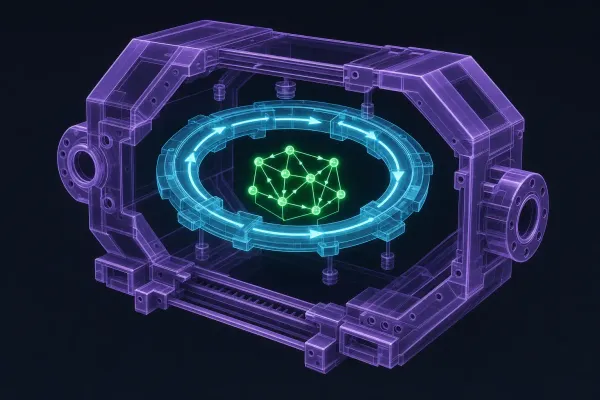
Harness, loop, graph, context engineering. Four terms everyone uses and almost nobody defines. Here is what each one means, which layer your system is actually failing at, and what it takes to get to something that ships work without you typing a prompt every time.

Steve Yegge spent six weeks building an agent harness that grew into something with law, offices, courts and a constitution. Then he wrote a second essay arguing the agents inside it are sentient persons. Four very different claims are stacked in there. Only some of them hold.
Anthropic shipped cross-session messaging as a convenience feature: stop re-explaining yourself in the other terminal. What actually shipped is an addressable peer network with its own threat model already written into the product, and the engineering worth reading is all in what a session refuses.
Agent cost depends on carried context, request frequency, caching, and authentication. A privacy-preserving engineering framework with explicitly hypothetical arithmetic, separate from measured billing or subscription allowances.