
678 Korean BBQ
One normal day in a biohacking family: the kids burn energy at football, then refuel on grilled protein and a table full of fermented vegetables — and I get a clean run at my own inputs. Here's why Korean BBQ is quietly one of the best meals a biohacker can order.
Move first. Eat real food second.
That was the whole operating system on the new nanny's first day — and it is what one normal day looks like in a family raised around biohacking habits, not biohacking theater. She took the kids to play football to burn energy, then to 678 Korean BBQ to refuel. Because the crew ran the day, I got a clean block for my own inputs.
Move first, then refuel
Kelly, the kids' new nanny, understood the assignment on day one: she is fully in the same mode — exercise, real food, good habits. So the kids ran around a football pitch before lunch, not after it. That order is the lesson. Exercise is not punishment for eating; movement is just part of the day, and food is the material the body rebuilds with. As a bonus, light activity before a meal helps — working muscles pull glucose out of the blood, so the plate that follows lands on a body that is primed to use it. No lecture required. The sequence teaches it.
This is the part I care about most. You cannot hand a kid a supplement stack or a bloodwork panel, but you can hand them a default: move your body, then eat food that came from a plant or an animal and not a factory. Do that a few thousand times before adulthood and you have built something no protocol can retrofit.
Why 678 is a biohacker's restaurant
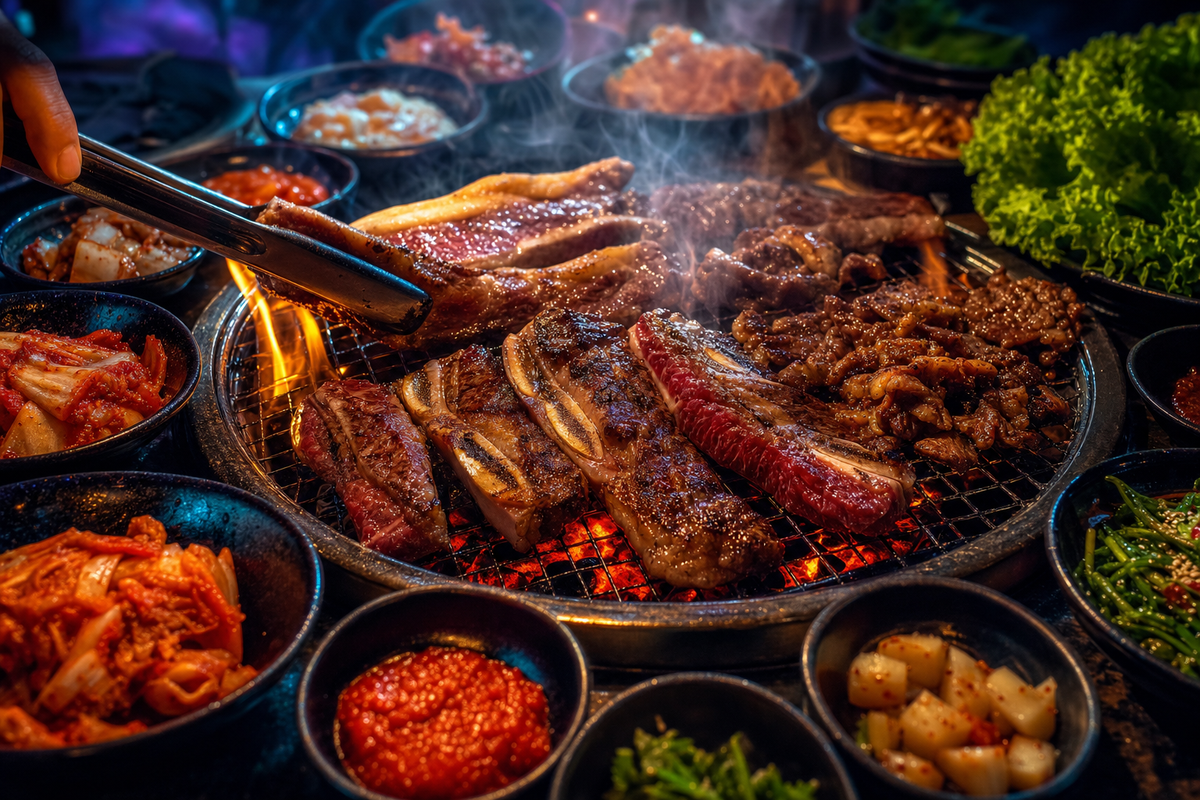
678 Korean BBQ, in El Poblado, was the first restaurant in Colombia to put charcoal grills directly in the tables. You sit around the fire, pick high-quality cuts, and cook them yourself. It reads as a party, but structurally it is one of the cleanest restaurant meals you can order — hot grill, good meat, vegetables everywhere, almost nothing processed.
Meat, muscle, and satiety
The center of the meal is protein — bulgogi, samgyeopsal, short rib. Complete protein with the full amino-acid profile the body uses to build and hold lean mass, which matters more every year past forty. Protein is also the most satiating macronutrient: a plate of meat and vegetables is far harder to overeat than one built on refined carbs and dessert. And the grill helps — as fatty cuts cook, a good part of the fat renders out and drips onto the coals instead of onto the plate. It does not turn pork belly into chicken breast, but the cooked cut carries less fat than the raw one.
The real move is ssam: wrap the grilled meat in a lettuce leaf instead of stacking it on rice. Add garlic, a little kimchi, a controlled dab of sauce. Skip the rice and a high-protein Korean barbecue plate stays comfortably under 600 calories. Lettuce is a better delivery system than rice when metabolic control is the goal.
Banchan is the cheat code
Most restaurants make vegetables something you have to order, and then talk yourself into. Korean food puts a spread of them on the table before you have negotiated anything. Banchan — seasoned greens, radish, cucumber, bean sprouts, mushrooms, seaweed — is fiber, potassium, and a wide micronutrient spread for zero willpower. The default environment does the work.
Then the fermented staples: kimchi, doenjang, gochujang. Fermentation raises the bioavailability of some antioxidant compounds, and fermented vegetables deliver lactic-acid bacteria and metabolites that interact with the gut microbiome. Observational research ties fermented-food intake and the traditional Korean pattern to better metabolic health, and some randomized kimchi trials show signals for improved insulin sensitivity, lower body fat, and reduced inflammatory markers. Signals, not miracles — fermented cabbage does not cancel bad sleep, inactivity, or a 3,000-calorie table. The gochugaru and gochujang also carry capsaicin, which has a mild thermogenic effect. Mild is the operative word.
One honest watch-out: sodium. Kimchi, the pastes, and the dipping sauces stack up fast. If you manage blood pressure or run salt-sensitive, control the sauces — not the vegetables.
The crew is the real hack
Here is the part that is easy to miss on the plate. Because Kelly and the rest of the crew ran the kids' day, I got to run mine — barbershop, actual rest, then the gym. That is not indulgence; it is infrastructure. I made the full case in Longevity — Good Company, so I will not re-argue it here: the people around you decide whether good habits run on autopilot or on willpower, and the effect size is not soft. A reliable crew manufactures time, kills chaos, and protects recovery — which is why it belongs in a longevity ledger next to sleep and training.
The day even came with a gift from SUTO, the Wagyu source I wrote about recently. Good food, good people, training, rest, and kids who moved before they ate. A full day, and none of it heroic.
Hot takes
- Move first, eat second. Exercise is not the tax you pay for the meal — it is the setup that makes the meal land better.
- Ssam is the whole trick. Swap rice for a lettuce leaf and a feast quietly becomes a protocol meal.
- Banchan is the only vegetable course people finish without being told to. Let the default environment do the work.
- Fermented cabbage is useful; calling it a longevity drug is marketing. Real signal, honest size.
- The best longevity move of the day was not on the grill — it was having a crew good enough to run the day without me.
The point
One normal day. Football before barbecue. Lettuce instead of rice. Vegetables already on the table. Protein after movement. A gift from good people, and a crew that makes the whole protocol easier to execute — for me and for the kids learning it by watching. Longevity is mostly this: ordinary habits compounding quietly while nobody is watching.
Longevity — Good Company — why the crew you keep is a real longevity lever, not a soft one.
Wagyu: The Best Fat on Earth — the fat chemistry behind the beef, and the place the gift came from.
Roblox, Legs, Sushi