
ChatGPT Images 2.0: From Brief to Reviewed Asset
Separate ChatGPT’s image workflow from API model parameters, assess text and consistency in generated examples, and review assets before publication.

OpenAI introduced ChatGPT Images 2.0 on April 21, 2026. Its API image model is gpt-image-2. This article examines that release and its examples; it is not a claim that the April model remains the newest available option.
The release’s Thinking mode adds a reasoning-and-tool workflow around image generation. It can incorporate web search and generate multiple images from a prompt. That product workflow should be distinguished from the capabilities and parameters of a direct Image API request.
The examples below illustrate multilingual composition, recurring fictional characters and dense graphics. They are generated assets to inspect, not controlled evidence that earlier models could never perform those tasks.
Reasoning belongs to a specified workflow
Earlier image systems used several architectures and could be part of iterative tool workflows. It is inaccurate to describe every previous model as one-shot diffusion without planning or verification. A product’s workflow also does not disclose every detail of the underlying model architecture.
For ChatGPT Images 2.0, OpenAI describes Thinking mode as adding reasoning and tool use. Do not assume that selecting gpt-image-2 in an Image API call exposes the same product controls, live search or internal sequence of steps.
Three useful areas to evaluate are text rendering, multilingual layouts and visual consistency. Each needs inspection against the actual brief.
- Text: compare exact spelling, labels and typography with the brief.
- Multilingual composition: have the relevant language checked rather than inferring correctness from appearance.
- Recurring subjects: compare identity, proportions and required details across every panel.
A more capable generation workflow can reduce revision work. It still needs editorial and visual checks. No undocumented claim about a diffusion architecture is required to explain that practical benefit.
What you can actually build now
These examples show possible uses of the April release. Their captions describe the intended asset and the checks needed before using it.

Multilingual dense text is a useful test because composition and language accuracy can fail separately. Compare the intended strings character by character. A visually cohesive poster is not evidence that every script is correct.




Character consistency is an evaluation target. Compare each scene with the approved character reference and with the other scenes. Reference images and iterative edits remain useful; requesting several outputs with n does not itself guarantee consistent identity.
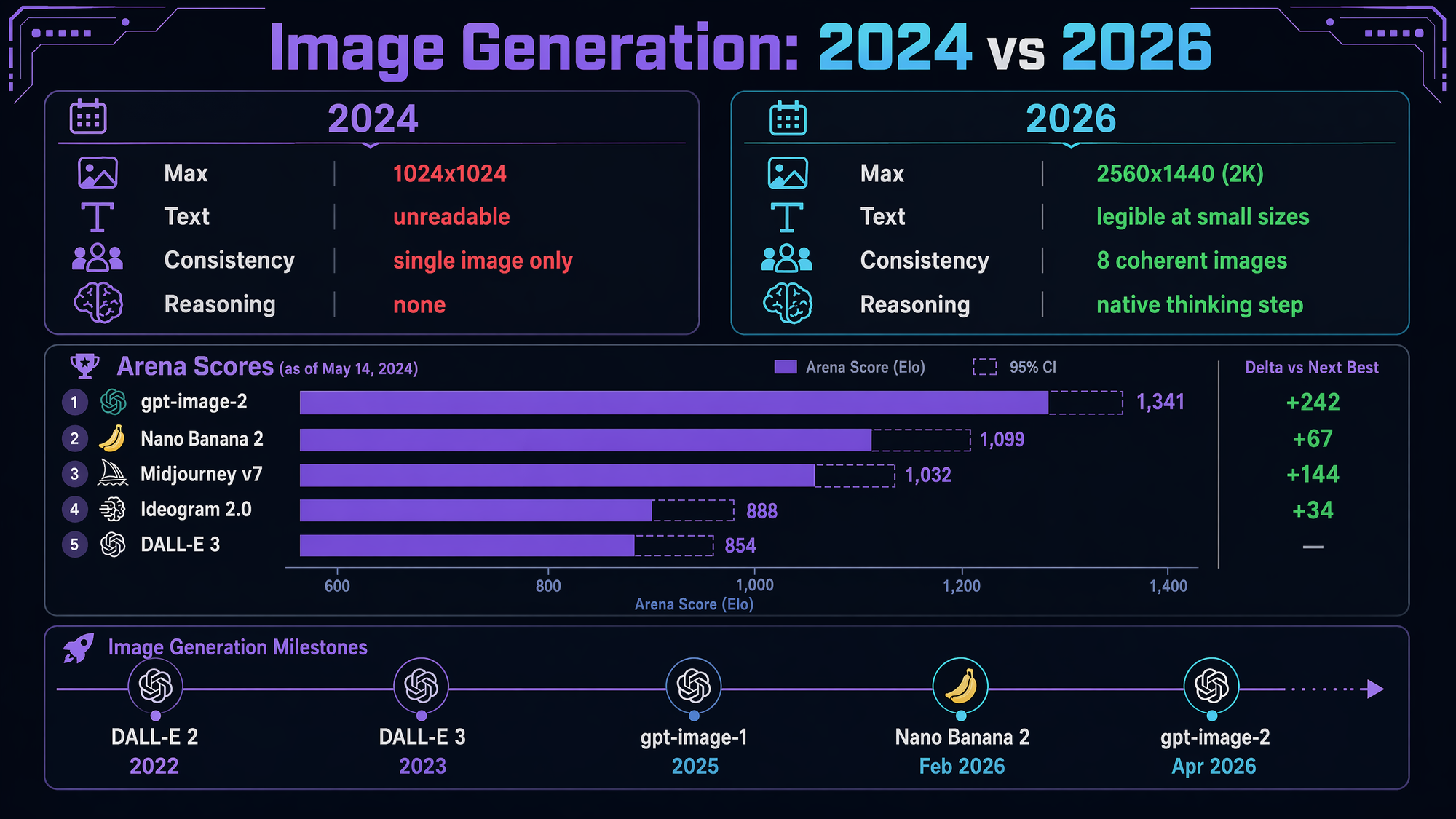
Dense graphics need two separate reviews: the rendering and the information. Check labels at the intended display size, then validate numbers, comparisons and units against a source. Higher resolution does not establish factual accuracy.
How to evaluate a generated asset
A leaderboard snapshot needs a date, evaluation method and primary source. The earlier ranking table did not provide enough evidence for its exact margin or historical-record claim, so it cannot support a model recommendation.
| Asset | Check before use |
|---|---|
| Poster | Exact text, script accuracy, hierarchy and intended audience |
| Storyboard | Subject continuity and required details in every panel |
| Infographic | Source data, units, chart geometry and readable labels |
| Product mockup | Brand accuracy, layout and whether the image could be mistaken for a shipped interface |
Compare on a shared brief
When comparing image models, keep the brief, reference material and review criteria fixed. Record the exact model, available quality settings, generation count and any manual revisions. Product names alone do not establish equivalent workflows.
Separate a pleasing result from a reliable process. A single strong image is useful, but repeated briefs reveal failures in typography, consistency or composition that one example may miss.
Choose the system that meets the specific asset requirements after review, with an acceptable amount of iteration. Avoid inferring a permanent category leader from one release or one public ranking.
For builders: API migration
A migration may start by changing a model identifier, but that is only one step. Check the chosen model’s current endpoint, parameters, output format and account access. Test the saved-image handling and actual outputs before replacing a working pipeline.
{"model": "gpt-image-2"}Check these boundaries for the specific API version:
- Model and endpoint: use the exact supported identifier and generation or edit interface.
- Output options: verify size, quality, format and batch limits for that model; do not copy a product UI label into an API request.
- Reasoning and search: ChatGPT Thinking mode and a direct image request are separate workflows. A knowledge cutoff is not live web grounding.
- Access and accounting: confirm account eligibility, rate limits and the measured cost of the complete workflow.
OpenAI’s image-generation documentation says organization verification may be required. Check the applicable account guidance. This does not establish a universal identity-check requirement for every future model or a guaranteed propagation time.
Consult the official deprecation notices before relying on an older endpoint. Do not infer a scheduled retirement merely because a newer image model exists. For a historical example such as this one, preserve the recorded model identity and state when current behavior has changed.
Closing
Generated images can support posters, mockups, diagrams and storyboards. Their usefulness comes from meeting a brief, not from replacing the need to inspect content.
Write down the asset’s purpose, required text, factual inputs and visual constraints before generating it. Keep authoritative data outside the image so that labels and comparisons can be checked.
A practical workflow is brief → generate → inspect → revise → verify → publish.
Use separate checks for visual quality, factual content and the intended use. Retain approved references when consistency matters, and inspect every output rather than assuming a batch succeeds as a unit.
The improvement to measure is how effectively the workflow produces a reviewed asset, including the time needed to correct it.
Primary references: April 21 release, Images 2.0 system card, API model page, and current image API guide. The current guide describes newer models; verify options against the model actually selected.