
The Best Thing in Animal Pak Is the 100 mg They Took Out
Universal Nutrition started in 1977 selling desiccated liver tablets. Forty-odd years later that liver is still inside Animal Pak, and so is a B-complex big enough to have its own regulatory file. I read every label in the line. The most interesting number is one they deleted.
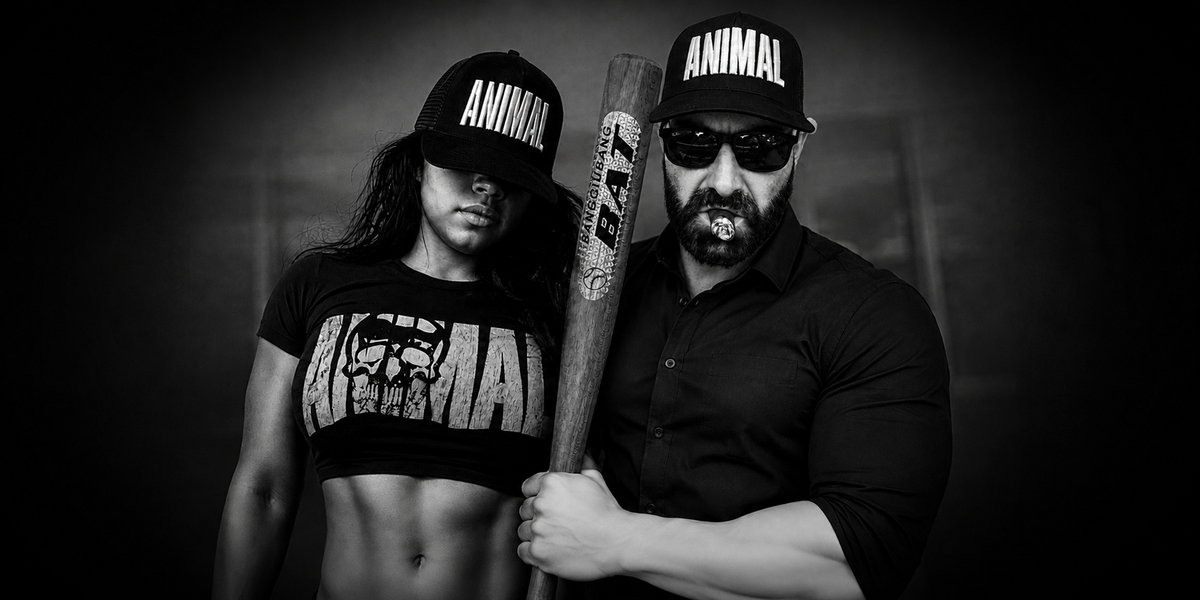
The most revealing number on the current Animal Pak label is not one of the ones printed in bold. It is a number that used to be there and is not any more.
The classic Animal Pak label, as archived by the US National Institutes of Health in 2013, 2014 and again in 2016, declared 180 mg of vitamin B6 per serving. The most recent label record in that database, added in January 2024, declares 80 mg. Thiamine stayed at 76 mg. Vitamin C stayed at 1,000 mg. Riboflavin stayed at 76 mg. Nothing else in the B-complex moved.
The rest of the B-complex did not move, so this reads as a targeted change rather than a general retreat from megadosing. I cannot tell you why they did it, because a label records what changed and never why. What I can tell you is that B6 is the nutrient in that block with the most active toxicity file, and that cutting it is the change a company would make if it were following that literature.
Animal is my favourite supplement brand and I have been taking their products for years. That is exactly why this is worth doing properly. Preference is not a substitute for arithmetic, and a brand that has survived four decades on the strength of its labels can withstand having them read closely.
Everything below comes from supplement facts panels archived in the NIH Dietary Supplement Label Database, from published regulatory opinions, and from Universal's own materials. Two caveats up front. That database archives labels submitted over time, it does not approve or certify anything, and the most recent record for a product is not guaranteed to match the box you bought this month. And where a number is missing below, it is missing because the manufacturer did not disclose it, which I will say each time.
1977: a milk-and-egg protein and a jar of liver tablets
Universal Nutrition was founded in 1977 in Linden, New Jersey, in the middle of what the trade press still calls the golden age of bodybuilding. Two of the first products it sold were a milk-and-egg protein powder and desiccated liver tablets.
That pairing tells you precisely what sports nutrition was before extracts, patents and fluorescent pre-workouts: concentrated food, basic micronutrients, and a willingness to swallow a great many tablets to get them. Desiccated liver was the era's shortcut: protein, heme iron, B12 and a stack of B vitamins in a form you could keep in a gym bag.
In 1980 the current owners bought the company and moved operations to New Brunswick, New Jersey, where it still is. It remains family-owned and family-run, manufactures in its own GMP facilities in New Jersey rather than contracting the work out, and ships to more than 90 countries.
Animal Pak arrived in 1983, and the format was the product. Not a bottle you counted pills out of, but a sealed foil packet holding a full training dose. One packet, one decision, no counting. It was sold as complete foundational nutrition for someone training hard, rather than as a vitamin with a bodybuilder on the label. Animal then grew from that one packet into a full sub-brand for strength athletes: Flex for joints, Pump before training, Nitro for aminos, Stak for hormonal support, Cuts for cutting, Omega for fats.
The system is the product. That is the whole strategy, and it has not changed in forty years.
The current Animal Pak contains a beef and liver blend at 2,430 mg per serving, listing beef protein isolate and beef liver. The split between the two is not disclosed, so the liver could be most of that or a minority of it.
Either way, beef liver is still in the flagship four decades after liver tablets were one of the first things Universal sold. Very few supplement companies have an ingredient on a 2024 label that traces back to their opening catalogue.
One more piece of corporate trivia that says something real about how the place is run: Universal Nutrition operated for roughly its first 44 years without a chief executive. Bob Levi was named its first-ever CEO on 2 February 2021, arriving from 20 years at Kraft Foods and Mondelez followed by nine years running small and mid-sized businesses. An American supplement manufacturer of that size running four decades on owner-management alone is genuinely unusual.
It is also worth killing a persistent piece of internet misinformation while I am here: Universal and Animal are not owned by Glanbia. That claim propagates because Glanbia does own several large sports nutrition brands, and search engines cheerfully blend them together. Animal is still the family's.
First, read the serving correctly
Before any of the numbers mean anything, one piece of label mechanics that most reviews of this product get wrong.
The declared serving on the archived Animal Pak label is two packs. A 44-pack tub is registered as 22 servings, not 44. Every figure in the tables below is per two packs, because that is how the manufacturer declared it. Halve them for a single pack, which is what the current on-pack directions suggest for ordinary training, and double the halved figure back if you run the two-pack protocol the label is written around.
This matters more than it sounds. Almost every write-up of Animal Pak online quotes the full-serving numbers while describing one packet a day. Those articles overstate what a single-pack user actually takes by a factor of two, in both directions: the vitamin C and the vitamin B6.
The current Animal Pak, line by line
All Animal Pak figures below come from the January 2024 label record. Per declared serving of two packs: 50 calories, 8 g carbohydrate including 4 g fibre, 4 g protein. The brand markets it as 85+ ingredients and the equivalent of 12+ separate supplements, and the current label carries the claims improved formula, 25% less pills, all-in-1 and bioavailability.
Vitamins
One number there deserves flagging alongside the B6. Niacin is at 82 mg, against a US tolerable upper intake for supplemental niacin of 35 mg in adults, set on flushing and, at higher chronic intakes, liver effects. The label does not declare the form, which matters: nicotinic acid is the form that flushes and the one the hepatic concerns attach to, while nicotinamide behaves differently. If you have ever taken Animal Pak on an empty stomach and felt your face and ears go hot twenty minutes later, that was the niacin, not the caffeine, because there is essentially none.
Now look at the top and the bottom of that table together. Thiamine is at 6,333% of the Daily Value and choline is at 16%. That is not a multivitamin in the sense most people mean the word. It is a very aggressive B-complex bolted to a serious mineral panel, with a set of auxiliary blends riding along in the same packet, and the unevenness is the design rather than an oversight. Animal has never pretended to be filling nutritional gaps. It is dosing the B vitamins that sit on energy metabolism as though they were an intervention.
Minerals
Three things to say about that panel, one good and two critical.
The good one first: iron is not on the panel. Humans have no regulated route for excreting iron, so in men and post-menopausal women it accumulates, and routine supplemental iron in a product aimed mostly at male strength athletes carries real downside for very little gain. Plenty of competitors add it anyway, because a mineral panel with a gap looks incomplete on a shelf. One honest qualification: the beef and liver blend almost certainly contributes some heme iron even though none is declared as a nutrient, so this is no added iron rather than no iron.
Now the criticism. The magnesium is declared as magnesium oxide and the zinc as zinc oxide, the cheap ends of both ranges. Magnesium oxide has low fractional absorption relative to citrate, malate or glycinate, which is precisely why it also works as a laxative. To be fair to the label, the 400 mg is elemental magnesium rather than the weight of the salt, so it is a correct figure. But low fractional absorption still means the delivered amount is well under the printed one, and that sits awkwardly next to the bioavailability claim on the same box. It is the clearest upgrade left in the flagship.
There is a second thing to say about that 400 mg, and it cuts the other way. The US tolerable upper intake level for magnesium from supplements, as distinct from food, is 350 mg per day. Pak is above it on the label before you add anything else.
The second criticism is co-ingestion. This formula puts 30 mg of zinc, 650 mg of calcium and 400 mg of magnesium into the same swallow. Interactions between these minerals are real, but they are dose- and form-dependent rather than automatic, and the evidence for a clean three-way effect at these amounts is thinner than the confident version you will read elsewhere. The fair statement is that all-in-one optimises for one swallow rather than for absorption, and those are different objectives.
The 100 mg they removed, and why it is the smartest thing on the label
Back to the opening. The old label had 180 mg of B6. The current one has 80 mg. Here is why that is the most consequential change Animal has made to its flagship.
The folk wisdom about water-soluble vitamins is that you cannot really overdo them, because whatever you do not use, you pass. Vitamin B6 is the standing rebuttal to that idea. Chronic high-dose pyridoxine causes a dose-dependent sensory peripheral neuropathy: numbness, tingling and impaired proprioception, starting distally. It is the classic and best-documented case of a water-soluble vitamin doing real harm, and the mechanism is not mysterious.
Two things about it are worth stating precisely, because this topic attracts both panic and dismissal. First, the clearest and most severe cases in the literature involve gram-level intakes sustained over long periods, and the syndrome is usually reversible on stopping. Second, there is genuine and unresolved scientific disagreement about where the threshold sits at lower chronic doses, and regulators have been moving in one direction on it.
The clearest illustration of that disagreement is that two of the world's major food-safety authorities are roughly eightfold apart on the same question:
So Animal Pak at 80 mg per two-pack serving sits below the American limit, though not by much and with no room left for the B6 in your food or in anything else you take, and sits at roughly 6.7 times the European one. The old formula at 180 mg was above both. Whichever authority you find more persuasive, moving from above-everything to below-the-US-limit is the responsible direction of travel.
One further detail that matters and that no marketing copy will tell you: the B6 is declared as pyridoxine hydrochloride. That is the specific form implicated in the neuropathy literature. The alternative, pyridoxal-5-phosphate, is the active coenzyme form and is widely assumed to be safer. Be careful with that assumption: the case reports are not cleanly confined to pyridoxine hydrochloride, and the evidence is not strong enough to call a form swap an established fix.
A single pack gives you 40 mg of B6. The full declared two-pack serving gives 80 mg. Add Animal Stak and it is 90.5 mg.
Against the US limit of 100 mg those are large but under it. Against EFSA's 12 mg they are between three and seven and a half times over. I am not going to tell you which regulator to believe, and this is not a risk calculation anyone can run for you from a blog post. It is a number worth knowing rather than one to assume is fine because the vitamin is water-soluble, and it matters more the longer the same stack has been running. Persistent numbness or tingling in the hands or feet is the classic presentation and is worth having properly looked at.
The amino acid complex is collagen, and the label proves it
Animal Pak discloses its amino acids individually, which is more than most products of this complexity do. Read the profile and it tells you something the marketing category does not.
Hydroxyproline is the giveaway. It is a modified amino acid that barely exists in ordinary dietary protein and is abundant in one place: collagen. Find 229 mg of hydroxyproline alongside 504 mg of glycine and 354 mg of proline and you are not looking at a muscle-protein profile. You are looking at collagen or gelatin.
That is not a scandal and collagen is not worthless. It has a reasonable case in connective tissue and skin, and glycine has its own arguments. But it should not be read as a miniature EAA formula, and the leucine number tells you why: 290 mg, against roughly 2.5 to 3 g of leucine generally associated with maximising a muscle protein synthesis response. This complex is not a protein serving and does not replace one.
The reason I can tell you any of this is that Animal disclosed the numbers. That deserves credit, and it sets up the real problem with the rest of the line.
What is a real dose, and what is label dressing
An 85-ingredient formula necessarily contains ingredients that are there to be counted rather than to do anything. Being specific about which is which is the most useful thing a review can do.
Spectra deserves its own sentence. It is a branded blend of 29 fruit, vegetable and herb concentrates, dosed at 100 mg in total. The internal split is not disclosed, so 3.4 mg apiece is only an average and some components are certainly larger than others. The honest read is that the name on the label is bigger than the mass behind it, and that nobody should see 29 fruits and vegetables and picture a serving of either.
Two form choices on the other side of the ledger. The vitamin E is d-alpha-tocopheryl succinate, the natural-source form rather than the cheaper synthetic dl-, which is better retained even if the clinical difference is arguable. The vitamin A is beta-carotene rather than preformed retinol, and that one is a genuine safety property, because conversion to retinol is regulated by the body in a way that preformed retinyl esters are not. The formula is not lazy. It is specifically lazy in the mineral forms and thoughtful in several other places.
Stack arithmetic, which is where people actually get into trouble
Animal sells a system, and the system's whole logic invites you to run several products at once. The labels are written as though each tub exists alone. Add them up and the picture changes.
I put the US upper limits in the bottom row because that is the comparison that makes the point. Pak on its own is already at the vitamin D limit and above the supplemental magnesium one. Add Stak and vitamin D goes over. Add Flex and zinc reaches 75 mg against a limit of 40.
Sustained high zinc can impair copper status and, in documented cases, produce a copper deficiency whose classic presentation is neurological, which is an uncomfortable overlap with the B6 section above. These are label totals rather than absorbed amounts, and the oxide forms mean the delivered figures are lower than the printed ones. That is a reason to be measured about this, not a reason to wave it away.
None of this is a reason not to use the products, and I use several of them. It is a reason to treat the system as a system and add up the columns before building a stack, because each of these labels is written as though its product were the only thing you take.
The rest of the line, graded honestly
Animal Flex — coherent architecture, unreadable doses
Three blocks: a 3,000 mg Joint Construction Complex of glucosamine, MSM and chondroitin sulfates A and C; a 1,000 mg Joint Lubrication Complex of flaxseed oil, a cetyl myristoleate blend and hyaluronic acid; and a 1,000 mg Joint Support Complex of ginger, turmeric, boswellia, quercetin and bromelain. Vitamin C 100 mg, vitamin E, zinc 15 mg, selenium 70 mcg and manganese round it out.
The three blocks are labelled construction, lubrication and support, which is a clean structure whatever the ingredients do in the body. The calculable limitation is this. Standard trial doses are 1,500 mg glucosamine and 1,200 mg chondroitin, which together would consume 2,700 of the 3,000 mg block on their own, and MSM is typically studied at around 3 g by itself. All three cannot be at their studied doses inside a 3,000 mg blend. That is all the label lets you conclude, and it is enough to know you cannot map this product onto the trials.
Animal Pump — the formula that has aged least well
A 3,000 mg Foundational Creatine Matrix from creatine monohydrate plus gluconate, orotate and dicreatine malate. A 2,000 mg NO Blast Complex of AAKG, beta-alanine, citrulline malate, carnosine and norvaline. A 500 mg Energy Rush Complex of caffeine anhydrous, kola nut, guarana and evodiamine. Plus a 650 mg antioxidant complex and a 1,000 mg transport blend.
Creatine at 3 g sits at the bottom of the commonly used 3 to 5 g maintenance range rather than below it, so that is a mild criticism rather than a damning one, and the exotic creatine salts alongside the monohydrate have not been shown to beat plain monohydrate. The firmer point is the 2,000 mg NO blend, which has to accommodate five ingredients. Two of them have target doses well above that on their own: roughly 3.2 g per day for beta-alanine and 6 to 8 g for citrulline malate. No single ingredient can exceed the 2,000 mg total, so neither reaches its studied dose from this serving. That is arithmetic rather than interpretation, and it holds without knowing the split.
Animal Nitro — the one that shows its work
Two separate complexes on the label: a 4,995 mg essential amino acid complex, and a Pro BCAA complex with each amino acid disclosed individually at leucine 3,500 mg, valine 1,815 mg and isoleucine 1,690 mg, which is 7,005 mg in its own right. Roughly 2:1:1 and leucine-forward, with the leucine above the amount usually associated with a maximal muscle protein synthesis response, though that threshold depends on the rest of the meal and on the person.
The BCAA side is proof that Animal can disclose when it decides to. You can read the ratio, compare it against the literature and decide whether it adds anything to your protein intake. The EAA complex is still a 4,995 mg block with no breakdown, so this is better disclosure rather than full disclosure.
Animal Stak — good nutrients, plausible botanicals, one legacy passenger
Vitamin D3 1,000 IU, B6 10.5 mg, magnesium 450 mg, zinc 30 mg. Then a 1,500 mg Pro Testosterone Complex of tribulus, tongkat ali, fenugreek, stinging nettle root and maca; a 1,500 mg Growth Hormone Support blend of arginine HCl, mucuna pruriens, glutamine, alanyl-glutamine and alpha-GPC; a 300 mg aromatase blend of resveratrol, calcium D-glucarate and DIM; a 500 mg amplifying blend; and 500 mg of milk thistle, astragalus, ashwagandha, Na-R-ALA and CoQ10.
The evidence behind these ingredients varies a great deal, and the hidden doses make any confident ranking speculative, but the broad shape is legible. Zinc and vitamin D reliably support testosterone in people who are deficient in them, and do very little in people who are not. Ashwagandha has the strongest botanical case in the pack. Fenugreek has some support. Tongkat ali is interesting and under-studied. Tribulus, by contrast, has repeatedly failed to raise testosterone in controlled human trials, and the US Department of Defense's own supplement-safety programme lists it among the ingredients not scientifically supported for that purpose. It survives in formulas like this one because it has been in them since the 1990s.
And because the doses are hidden inside blends, you cannot tell whether the tribulus is 900 mg carrying the complex or 90 mg riding along for the ingredient list. That is the difference between a formula you can evaluate and one you have to believe in.
Animal Cuts — effective at something, opaque about what
A 750 mg Stimulant Complex of caffeine anhydrous, kola nut, guarana, yerba mate, raspberry ketones, forskolin and evodiamine. A 750 mg Metabolic Complex of green, oolong, black and white teas plus coffee bean. A 350 mg Thyroid Complex of tyrosine, olive leaf and sage. An 800 mg Water Shedding Complex of dandelion, uva ursi, hydrangea, buchu, juniper and celery. Those are per-pack amounts and the directions are two packs a day, so double every one of them for a daily total.
The undisclosed caffeine is the real issue, and the twice-daily protocol doubles it. You cannot calculate your daily stimulant intake from this label, which is a meaningful gap for anyone who also drinks coffee or uses a pre-workout. The water-shedding block should be understood for what it is: a multi-ingredient diuretic complex, at undisclosed doses, that moves scale weight without moving fat. Whatever you make of that trade, it is not a fat-loss signal and should not be read as one.
Animal Omega, PM and Energy
Omega gives a 4,000 mg omega-3 complex from flaxseed, salmon, cod liver, herring, anchovy, mackerel and sardine oils, plus a 2,500 mg omega-6 complex. The number that matters, and that is absent, is the actual EPA and DHA yield. Four grams of mixed oils, some of it flaxseed whose ALA converts to EPA at a poor rate in humans, does not tell you your EPA and DHA intake. That is the number the marine omega-3 literature runs on, and it is the one the label withholds.
PM runs a 3,000 mg GH-support blend of GABA, AAKG, ornithine, tryptophan and alpha-GPC, a 2,500 mg immune and recovery blend, and a 1,250 mg sleep blend of valerian, chamomile, hops and L-theanine. The sleep botanicals are the part with the most support; the oral GABA carries a long-standing argument about blood-brain barrier penetration, though that argument alone does not settle whether it does anything, since peripheral mechanisms have been proposed.
Animal Energy is the outlier in the range, and in the right direction: 300 mg of caffeine anhydrous, disclosed as a specific number, inside a 750 mg complex. One capsule, one number you can plan around.
The proprietary blend problem, and the evidence it is ending
Here is the single biggest scientific weakness in the Animal line, stated plainly. Pak and Nitro disclose most of what matters individually. Stak, Cuts, Pump, Flex and Omega do not. They give you the total weight of each complex and withhold the amount of each ingredient inside it.
Pak is not a clean example either, to be fair to the criticism. Its whey blend at 2,190 mg, its beef and liver blend at 2,430 mg and its 100 mg of Spectra are all blocks with no internal breakdown. Call it partial transparency, and note that the parts it does disclose are the parts a reader can act on.
That is the line between a label you can reason about and a label you have to trust. It makes comparison against controlled trials impossible, it hides stimulant exposure in two products where stimulant exposure is the active variable, and it makes a token dose indistinguishable from a dominant one. The standard industry defence is formula protection. Quantifying a complex botanical blend is genuinely harder than the internet suggests, so the defence is not empty. It is still a bad trade, because the customer is the party least able to work around the missing information and the one whose dose determines the effect.
But the interesting part is what happens when you look at the newest product in the range instead of the oldest.
Not one proprietary blend. Every ingredient individually dosed, in a hormonal-support product, which is the exact category where the industry hides behind blends hardest. The tribulus question now has a number attached: 250 mg. Extract standardisation still is not declared, so that does not map cleanly onto any particular trial, but a disclosed number you can argue with beats a blend weight you cannot.
One product does not prove a policy, and I am not going to claim the whole line has turned. What it does prove is capability. The transparency argument is no longer hypothetical for this company, because its own most recent label already does the thing. The obvious reform is to bring that standard back to Stak, Pump, Flex, Cuts and Omega.
Six things I take from reading forty years of these labels
2. The amino acid complex is a collagen story, and the label says so if you read it. Hydroxyproline next to high glycine and proline is a chemical fingerprint. Animal disclosed enough for anyone to work that out, which is more than the category usually allows.
3. The absence of iron is a feature, and a costly one. Leaving a row blank on a mineral panel aimed at adult men is a safety decision that looks like an omission on a shelf.
4. The mineral forms undercut the bioavailability claim. Magnesium oxide and zinc oxide are the two cheapest choices available, sitting on a box that advertises bioavailability. This is the clearest upgrade left in the flagship.
5. The biggest-sounding number is usually the least informative one. Omega's 4,000 mg and Flex's 3,000 mg tell you less than Nitro's disclosed 3,500 mg of leucine. Blend weight is not dose.
6. The oldest idea in the catalogue is still inside the flagship. Beef liver, among the first things Universal sold in 1977, is on the 2024 label inside a 2,430 mg beef and liver blend. Not nostalgia. A company that never stopped believing its first idea was right.
Who this is actually for
Animal is for people who want a packaged system, will accept a serious pill burden, and are training hard enough that a foundational product is not the limiting factor in their results. Pak in particular is best understood as a broad floor rather than an intervention, and not as a guarantee of adequacy, since its own choline and potassium rows show it is not trying to cover everything. If you are eating well and sleeping badly, this is not the purchase that fixes your next twelve weeks.
It is a poor fit for strict single-variable self-experimentation. If you are trying to isolate what a given compound does to your sleep, your HRV or your bloodwork, an 85-ingredient packet is the opposite of what you want. Take the products whose doses are disclosed, skip the ones whose are not, and add the columns before you stack. Anyone already running high-dose B vitamins, zinc, magnesium or vitamin D from another source should do that arithmetic before adding a second pack rather than after.
The reason Animal keeps my money is not that every formula is optimal. Several are not, and I have just spent an article saying which. It is that the catalogue contains the entire history of this industry in one place: food concentrates and liver tablets, kitchen-sink megadosing, proprietary blends, stimulant stacks, branded absorption ingredients, and then a slow and unforced turn toward restraint and disclosure. This one is still family-owned in New Jersey, still making the product in its own building, and it took 100 mg of B6 out of its flagship at a point when nothing forced it to.
Keep the system. Keep the packets. Publish every dose.
Every dose, percentage and ingredient list above is transcribed from supplement facts panels archived in the NIH Dietary Supplement Label Database, product by product: Animal Pak records from 2013, 2014, 2016 and January 2024, plus the archived labels for Flex, Pump, Nitro, Stak, Cuts, Omega, PM, TNT+ and Energy.
The B6 upper intake levels come from the EFSA 2023 scientific opinion on the tolerable upper intake level for vitamin B6 and from the long-standing US Institute of Medicine value. The other upper limits quoted are the US adult figures. Company history and current positioning come from Universal Nutrition and animalpak.com.
Anywhere a dose is inside a proprietary blend, it is not in this article either, because it is not on the label.
No Capsule Adds Hours — what supplements can and cannot do, measured against the things that actually move the numbers.
The Deficit Beat the Peptides — the same lesson from the other direction, with bloodwork attached.
Twenty-One Markers and an ECG — why measuring beats guessing, especially on the vitamin D and the minerals above.
MONSTER 2.0 — The Blueprint — the training all of this is supposed to be supporting.
Three of Six — MONSTER 2.0 Day 3, and what three near-identical tonnage totals across different muscle groups actually prove.