
AI Adoption Beyond Hype and Rejection
A practical way to evaluate AI workflows: separate capability, value and permission, compare complete outcomes, and revise decisions as evidence changes.

AI-Native Principal Software Engineer. Building reliable systems with AI agents, architecture and production discipline.
A practical way to evaluate AI workflows: separate capability, value and permission, compare complete outcomes, and revise decisions as evidence changes.

Separate model behavior from client regressions, verify reported failures, and measure completed-task quality using the April 2026 postmortem and reproducible evidence.

Sinapt proposes a shared retrieval layer for engineering knowledge. The design questions are source coverage, access control, provenance, evaluation and usable interfaces—not an assumed productivity multiplier.

Workload Identity Federation replaces a workload’s long-lived Claude API key with short-lived tokens. The integration still needs scoped trust rules, protected credentials and a verified migration.

Anthropic published a 23,000-word values manifesto for Claude under CC0. The four-principle priority order, the Aristotelian framing, and what every operator should internalize before their next session.

Configure one canonical memory store, migrate existing notes with verified backups, and check where the agent actually reads and writes. Git synchronization and optional aliases remain separate concerns.

The Sinapt brainstorm needs one architectural correction: it is two products. The knowledge-base infrastructure ships first; the cockpit is a future opinionated layer on top.

A product concept for connecting coding agents, an editor and a shared knowledge layer. The article explores integration requirements and the boundaries a prototype would need to test.

Two models on one branch. Claude writes the code and ships the PR; Codex reviews with fresh eyes. No agent framework, no MCP plumbing — just one CLI call from inside the editor. The simplest agent orchestration that actually works.

Compare model availability, evaluation conditions and completed-task quality. Use a separate reviewer without assuming independent errors or universal benchmark winners.
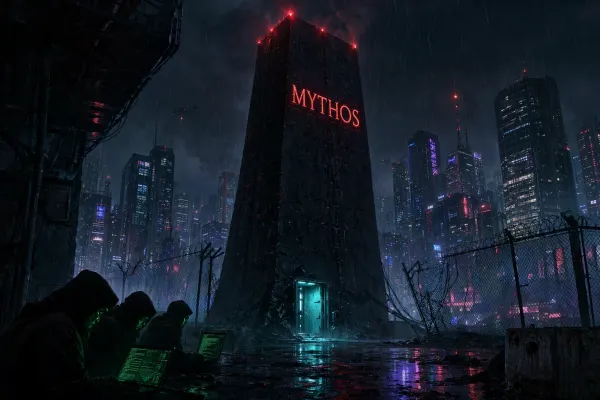
Use Mythos Preview and Project Glasswing to distinguish tested capabilities, access controls, defensive outcomes and governance questions without unsupported motive claims.

Separate ChatGPT’s image workflow from API model parameters, assess text and consistency in generated examples, and review assets before publication.