From Protocol to Practice
Day 1 of the protocol. Four compounds mixed and four sticks delivered in twenty-five minutes. The execution turned out to be the easy part.
There is a moment in any operator project where the planning phase ends and the doing phase begins. The plan is a story you tell yourself; the execution is the part that pushes back. For me that moment was 10:30 AM on a Tuesday — the first injection day of a six-month TRT-and-peptide protocol I had spent the previous five days assembling.
I had read the prescription. I paid. I received the cold-chain delivery, double-counted the vials, organized the fridge layout, walked through every PDF instruction document, identified the dose typos, talked to the clinic about the leftover-ampoule protocol. I had a daily check-in routine wired up in my AI agent. I had two black-and-white print-ready PDFs sitting on the desk — one for me in English, one for the home nurse in Spanish — laying out exactly what we were doing.
And then we did it. Four compounds. Twenty-five minutes. The whole thing felt anticlimactic. Here is exactly what the workflow looked like.
The setup
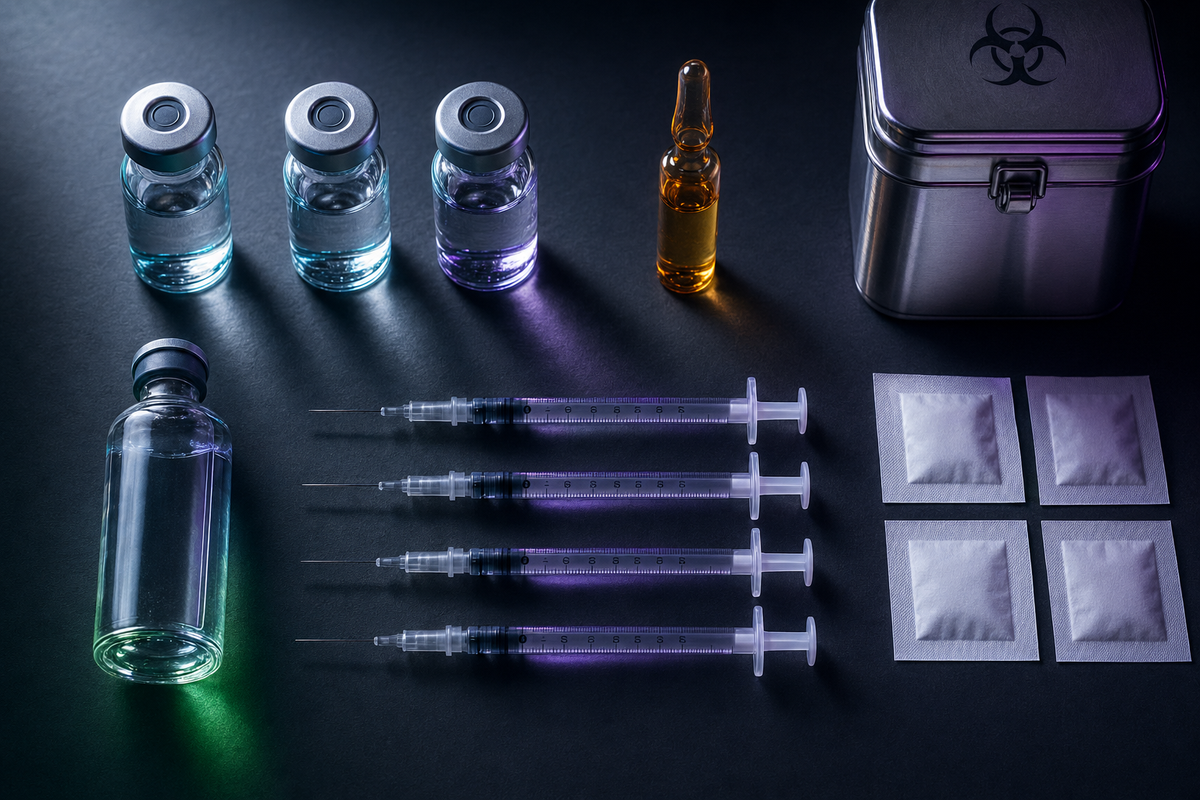
The home nurse from TRT Colombia arrives at 10:30 AM. We lay everything out on the kitchen counter in two zones: cold-chain compounds straight out of the fridge — three peptides (Retatrutide, BPC-157, TB-500) — and the room-temp testosterone ampoule from the Pelican case.
Alongside: a fresh box of 1 mL U-100 insulin syringes (29-31G fixed needles, eight millimeters long), alcohol prep pads, sterile gauze, a CDC-certified sharps container, and an empty sterile glass storage vial.
The PDFs come out. Each compound has its own one-page instruction sheet from the clinic — mixing recipe, dose volume, technique. The nurse scans them, I scan them, we cross-reference both with the master prescription and the print-ready summary I generated this morning. No surprises. Everything matches.
Mixing
The mixing phase is mostly a question of math and patience.
For the three peptides:
- Take the lyophilized powder vial out of the fridge. Wipe the rubber top with an alcohol pad.
- Pull the bacteriostatic water bottle out. Wipe its top with alcohol too.
- Draw the recipe-specified amount of bact water into a syringe (different per compound — see the table below).
- Inject the bact water gently into the powder vial, aiming the stream against the inner wall, not directly onto the powder.
- Swirl the vial in slow circles between your palms. Never shake. Peptides are fragile; shaking can fragment them. The powder dissolves into a clear solution within ten or fifteen seconds.
- Date and label the vial. Back into the fridge.
For the testosterone, no mixing — the cypionate ester is suspended in cottonseed oil and arrives ready to inject. The catch: a 1 mL ampoule contains 250 mg, and the prescribed dose is 100 mg = 0.4 mL. That leaves 0.6 mL of leftover oil to manage.
The procedure: snap the ampoule top with a piece of gauze for grip, draw 0.4 mL = 40 units of testosterone directly into a 1 mL U-100 insulin syringe — that is the patient dose. Transfer the remaining 0.6 mL of oil from the ampoule into the empty sterile storage vial through its rubber stopper (alcohol pad first, of course). The storage vial sits at room temperature next to the remaining ampoules and gives you roughly 1.5 more doses out of one ampoule's leftover. One ampoule yields 2.5 doses total. Ten ampoules cover six months at 100 mg per week.
A note on needles. Every injection in this session — the three peptides AND the testosterone — went in through the same 1 mL U-100 insulin syringe with its fixed 29-31G, eight-millimeter needle. The clinic ships a larger 3 mL syringe with a 21-gauge needle in the testosterone box for operators who prefer the traditional intramuscular glute approach, but for subcutaneous abdomen the insulin needle wins on every dimension that matters: thinner gauge so the stick is virtually painless, shorter length so you cannot accidentally hit muscle, fixed needle so there is no transfer step, easier handling for self-injection. The trade-off: cottonseed-oil testosterone is more viscous than peptides in bacteriostatic water, so the draw takes a few seconds longer through the thinner gauge. Be patient on the draw; the stick itself is the same painless ninety-degree push as the peptides. Mismo pinchazo for everything in this protocol.
Reconstitution recipe
| Compound | Vial | + Bact water | Concentration | Dose | Draw volume | Insulin units |
|---|---|---|---|---|---|---|
| Retatrutide (M1) | 6 mg powder | 2 mL | 3 mg/mL | 500 mcg | 0.17 mL | 16.7 u |
| BPC-157 | 10 mg powder | 3 mL | 3.33 mg/mL | 250 mcg | 0.075 mL | 7.5 u |
| TB-500 | 10 mg powder | 4 mL | 2.5 mg/mL | 2 mg | 0.8 mL | 80 u |
| Testosterone Cypionate | 1 mL ampoule (250 mg) | n/a — oil | 250 mg/mL | 100 mg | 0.4 mL | 40 u |
Three peptides reconstituted in bact water. The testosterone is oil-based and pre-mixed; the only "mixing" required there is the leftover-ampoule transfer to a sterile storage vial.
Drawing
Once the peptides are reconstituted, drawing the dose is mechanical. You wipe the vial top again, pull the syringe plunger to the dose mark in air units, push the air into the vial, then invert the vial and draw the liquid to the dose mark.
The reason for the air-in-first trick: peptide vials are sealed and removing liquid without replacing volume creates a vacuum that fights you. Pushing air in equalizes the pressure and lets the plunger draw cleanly.
Then the bubble check. Hold the syringe needle-up against a light, tap the barrel firmly with a fingernail. Air bubbles rise to the top and collect at the needle base. Push the plunger gently until the first drop of liquid emerges from the needle tip — that confirms the air is fully cleared and the plunger is at the right liquid mark. A second tap and second small push for any straggling micro-bubbles.
For four compounds in one session, you end up with four prepared syringes lined up in parallel order on the counter. The nurse handled three; I handled the fourth as practice.
The stick
Here is where I was expecting the rocket science. Here is where it turned out to be embarrassingly simple.
For an abdominal subQ injection — which is how every compound in this protocol gets administered — you do this:
- Pick a quadrant. Upper Right, Upper Left, Lower Right, Lower Left — taking the navel as the center. Stay at least five centimeters from the navel itself; the skin there is thinner and more vascular. Different compounds go in different quadrants on the same day; same compound rotates quadrants week to week to prevent lipohypertrophy.
- Wipe the site with an alcohol pad.
- Pinch a fold of skin between two fingers — about two and a half centimeters of fold. This lifts the subcutaneous fat layer cleanly off the muscle wall and gives the needle a target.
- Insert at ninety degrees, all the way to the hub. Insulin needles are eight millimeters long — about the width of a pencil eraser — so "all the way" is barely anything. You feel a tiny prick, sometimes nothing at all.
- Push the plunger slowly, three to five seconds for a small dose, longer for the 0.8 mL TB-500. TB-500 was the warmest of the four for me — mild burning sensation right around the site, gone within ninety seconds. The other three were silent.
- Hold the needle in place for five seconds after the plunger bottoms out. Lets the depot settle, prevents backflow.
- Withdraw straight out. Press a fresh alcohol pad to the site without rubbing. A tiny dot of blood is normal; rubbing risks bruising.
- Drop the syringe directly into the sharps container. Never recap — recapping is how needlestick injuries happen.
Four compounds in four different quadrants of my abdomen, all done in maybe four minutes once the prep was finished. None of the four hurt in any meaningful sense. The whole session — mixing, drawing, sticking, disposal — clocked under thirty minutes from when the nurse arrived.
Cleanup and storage
After the four sticks: peptides go back in the fridge. Reconstituted, each peptide vial is good for fourteen to thirty days depending on the compound. The testosterone ampoule and the storage vial of leftover oil go into the Pelican case at room temperature; refrigerating cottonseed-oil testosterone causes it to solidify and the dose math goes out the window the next time you draw it.
The bact water goes back in the fridge once opened — sealed at room temp before first use, but the bacteriostatic preservative degrades faster after the first puncture, so cold storage extends its useful life.
The four used syringes go into the sharps container, lid clicks shut. The container itself goes back into the supply zone of the Pelican case; when it is two-thirds full it gets dropped at a pharmacy with biomedical-waste disposal services.
The lesson
The whole thing is simple. That is what nobody told me beforehand.
The plan looked dense — eight compounds, six different concentrations, multi-dose ampoule protocols, cold-chain rules, dose typos in vendor PDFs to catch, M1-versus-M2-6 month transitions, weekly cadence rotations across the calendar. Reading it cold, it felt like rocket science.
Doing it once, with a trained nurse walking through every step, the actual mechanics took less time to learn than tying my shoes on the first try as a kid. Mix. Draw. Pinch. Stick. Push. Wait. Withdraw. Dispose. Repeat. The complexity is in the planning, the dosing math, the calendar logistics, and the data interpretation. The execution is rote.
That is a real lesson for anyone considering a serious biohacking protocol: the barrier you imagine — needles, mixing, doing it yourself — is mostly a phantom. The actual hard parts are upstream (choosing the right compounds with the right physician, getting the right vendor, getting the dosing math right) and downstream (interpreting the bloodwork retest at week twelve, deciding what to continue and what to drop).
The middle — the actual injection — is the part Day Zero teaches you in twenty-five minutes.
The vendor: TRT Colombia and Camel
A protocol like this only works as smoothly as the clinic running it. TRT Colombia runs a broker model — they coordinate licensed physicians, lab draws, compound delivery, and home-nurse training in a single bundled flow. For a Medellín-based biohacker that is the difference between a six-month operational headache and a six-month protocol that actually runs.
The single most underrated layer of the whole experience has been Camel, the clinic coordinator who handles everything between the prescription and the needle. Ten days of WhatsApp exchanges, thirty-plus messages, every imaginable operational question — pricing breakdowns, dose typo flagging in vendor PDFs, ampoule-leftover protocol, schedule design, delivery verification, storage debate, syringe gear inventory, holiday accommodation around Día del Trabajo, travel-certificate requests. Response times typically under two hours on weekdays, under twelve hours on weekends. Verbatim-accurate quotes. Clear separation between definitive answers and "let me check with the doctor". Friendly without being unprofessional, professional without being cold.
That kind of coordinator is rare in any clinical setting. In a biohacking-clinic context, where most of the value flow happens over messaging rather than office visits, it is the difference between a protocol that lands and a protocol that drifts. If you are picking a clinic, weight the coordinator-quality dimension hard. The doctor signs the prescription; the coordinator runs the daily reality.
What is left in Day Zero week
Three more nurse visits over the next three days, each progressively more solo:
- Wednesday: five compounds — HCG, NAD+, CJC-1295, Ipamorelin, BPC-157. The biggest training session of the week. Every new compound type gets walked through.
- Thursday: three compounds, all daily peptides. Practice solo with the nurse watching.
- Friday: four compounds, final review. Sign-off for full solo execution from Saturday onwards.
Plus pending from the clinic: travel certificates from Dr. Barrera so the compounds and syringes can move freely inside Colombia and across borders. International travel with research-grade peptides and a Schedule-III hormone (testosterone) needs medical-necessity documentation; the clinic is preparing the carry-letter format by tomorrow morning.
What changes when
The protocol is loaded. The first dose is in. From here:
- Day 1-3: nothing felt acutely except mild appetite drop from Retatrutide and possibly deeper sleep starting Wednesday night once CJC + Ipamorelin go in.
- Week 2-3: testosterone whispers — energy lift, libido, recovery quality.
- Week 3-4: the first "wow" window. Visible waist reduction from Retatrutide, mood and gym recovery online.
- Week 6-8: people start commenting. Body composition visibly different.
- Week 12 (July 30): bloodwork retest. The decision gate for what continues, what changes, what gets dropped.
- Six months: full evaluation. Locked path or pivot.
The plan exits. Practice begins.
Four compounds. Four sticks. Twenty-five minutes.
The shape of the thing was simpler than the shape of the planning.