Once a Biohacker, Always a Biohacker
Genetics is the hand you're dealt. Thirty years of showing up is how you play it. Why the discipline I started at sixteen became the one thing I'd never trade — and never quit.
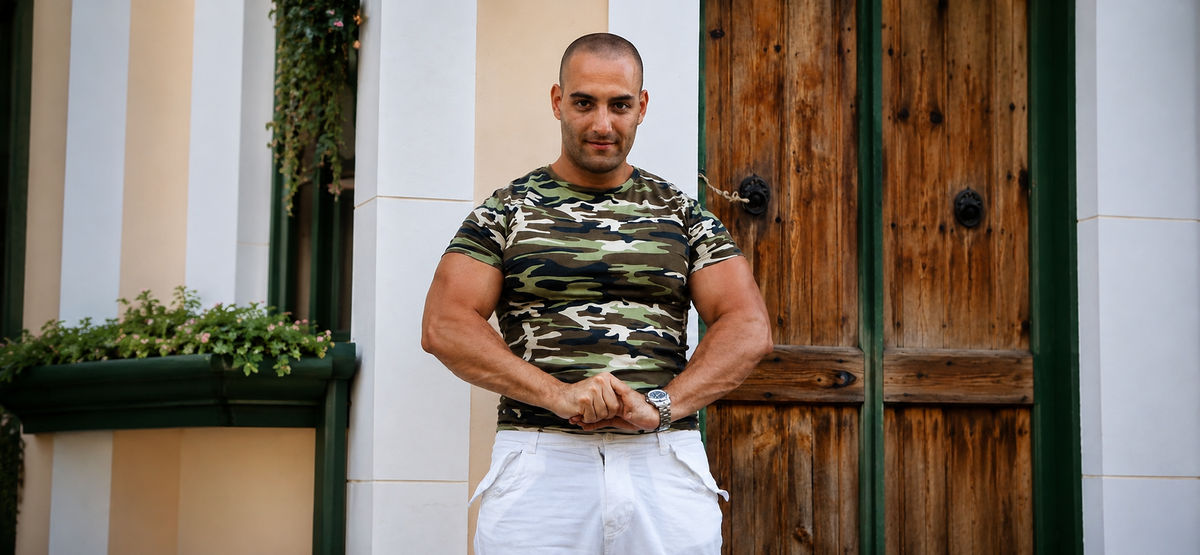
I was sixteen the first time I walked into a gym, and I never really walked back out. Within weeks the training wasn't enough on its own — I wanted to know what to eat, what to supplement, how to sleep, how to recover, how to hack the machine from the inside. The curiosity became an obsession, the obsession became a discipline, and the discipline became an identity — it never switched off. Twenty-eight years later, biohacking isn't something I do. It's something I am.
That's me in two clips: one from twenty-plus years ago, one from this week — different decade, same body under load, same operating system running underneath. Wire this in young and it doesn't leave.
The hand and the game
Let me be honest about the genetics, because pretending otherwise would be dishonest: I was dealt a good hand. Strong frame, responds fast to training, recovers quickly. But genetics is the hand you're dealt — it is not the game. I've watched people holding better cards than mine fold them into decline by forty, and people with worse ones build something remarkable out of nothing but consistency.
What actually built the result is thirty years of small, disciplined deposits stacked on top of that hand: the highest-quality nutrition I could get my hands on, training that never stopped, and — from very early — a life spent traveling, mostly to tropical places. Sun, sea, movement, real food, a body constantly exposed to new environments instead of sealed inside one. None of it flashy. All of it compounding.
What compounds
Here's the payoff, and it's the part I'd bet on: I almost never get sick. Energy and productivity aren't things I chase — they're just on, by default, most days, at forty-four. That isn't luck, and it isn't the genetics alone. It's the interest on decades of showing up: every clean meal, every session, every night I protected, every cheap shortcut I didn't take. Resilience isn't a supplement you buy. It's a balance that only grows if you keep making deposits.
Discipline equals freedom. — Jocko Willink
That line is the whole thing. The discipline of the lifestyle — the training, the food, the boring consistency — is exactly what buys the freedom: a body that doesn't quit on you, a mind that stays sharp, energy you never have to manufacture. You pay in discipline up front and collect in freedom for the rest of your life.
Here's my honest take: real biohacking begins when the novelty ends. Anyone can get excited about a new device or a thirty-day protocol. The deeper practice starts when there's nothing left to post, buy, or announce — when you still train, still eat clean, still protect your energy, because that is simply who you are.
The mindset
Which is why I've come to see biohacking as less a toolkit than an identity. The gadgets, the compounds, the protocols are just this decade's expression of it. Strip all of it away and what's left is the mindset: treat your body and mind as a system worth optimizing, forever, and act on it every single day. That's the part that never ages out.
The military understands this better than anyone — you don't rise to the level of your ambition, you fall to the level of your training. Thirty years of training is why the floor sits so high. When life tests the machine, it holds, because the machine was built to.
So no, I don't "do biohacking." Somewhere along the way it stopped being a practice and became a person. At sixteen I thought I was building muscle; I was actually building a standard — one that's followed me for three decades. At forty-four, I'm still reporting for duty. The methods evolve; the identity doesn't. Once a biohacker, always a biohacker.
Samurai — discipline as an operating system.
Monster Bodybuilding Workout Plan — the training side, laid out.
Wagyu: The Best Fat on Earth — the nutrition obsession, one cut at a time.