Even If You Are Tired, Keep Moving Forward
I was tired, I'd napped, it was late, and I had already talked myself out of the gym using entirely correct principles. Then my son hugged me and said seven words, and the argument ended. On giri, why obligation beats motivation, and the honest cost of training at 22:00.
疲れても進め
*Tsukarete mo susume.* Even if you are tired, keep moving forward.
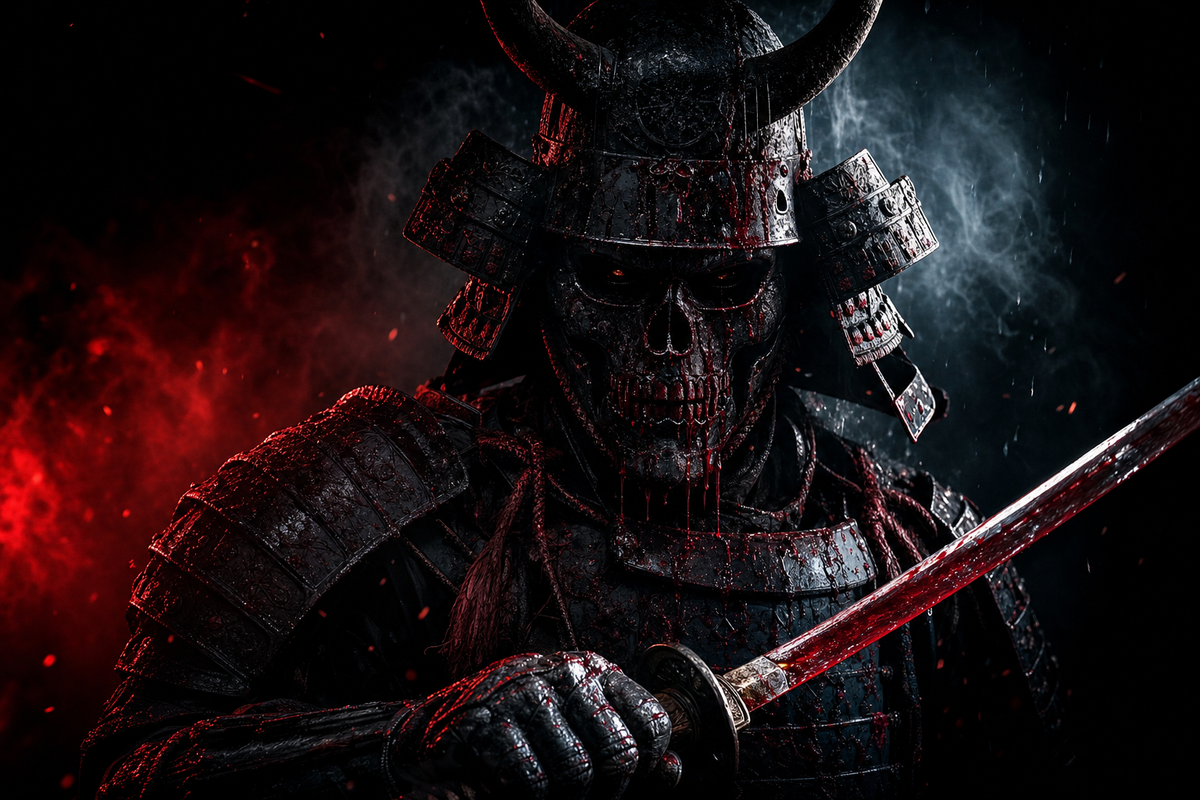
Six words on a black-lacquered skull mask. It's the kind of line that's easy to nod at and hard to execute, and yesterday I got to find out which one I was doing.
The Honest Version
I was tired. Genuinely tired, not dramatically tired. So I took a nap in the afternoon — which felt like the responsible, recovery-minded, biohacker thing to do.
Then it got late, and it was time for the gym.
And I stood there running the negotiation. You know the one. It's fine to rest one day. Rest is part of training. Overtraining is real. You've been consistent for months, one session won't matter. Recovery is when adaptation happens. You literally write about this.
Every one of those statements is true. That's what makes the negotiation so dangerous — it isn't built out of lies. It's built out of correct principles, selected specifically because they lead where you already wanted to go. I wasn't reasoning. I was recruiting evidence.
I was going to skip it. I'd basically decided.
Then My Son Hugged Me
He came over, put his arms around me, and said:
He wasn't trying to motivate me. He had no idea I was standing there arguing with myself about a leg session. It was just a kid hugging his father on an ordinary evening.
And something reorganised itself.
Because in that second the whole thing snapped into focus. The bloodwork. The injections. The protocol. The sleep tracking. The food. The gym. The work, the AI, the company being built across three countries. Standing between my children and anything that would harm them. None of that is a hobby, and none of it is about me.
It's all one project, and they are the reason for it. I'm not optimising a body. I'm trying to be the man who can still keep up with them in ten years, and in twenty, and who is standing there when it matters.
The negotiation ended instantly. Not because I found more willpower — because the question stopped being about me.
Giri
There's a word for that, and the samurai had it long before anyone invented a wearable.
義理 — giri. Duty. Obligation to others. Not motivation, not discipline, not self-improvement. The bushi didn't train because they felt like training; feelings were understood to be weather. They trained because other people's lives were downstream of how sharp they were.
That is a fundamentally different engine, and it's the reason the samurai framing keeps showing up in this stuff rather than the usual hustle vocabulary. Motivation is internal, so it can be argued with. You can talk yourself out of something you're doing for yourself, and you'll be persuasive, because you know all your own weak points.
Obligation to someone else can't be negotiated the same way. There is nobody on the other side of that argument to concede to. My son didn't give me motivation. He converted an internal debate into an external duty, and internal debates lose to those every single time.
The Hagakure has a version of this: decide in advance, so that the moment doesn't get a vote. The moment is not a fair judge. The moment is tired.
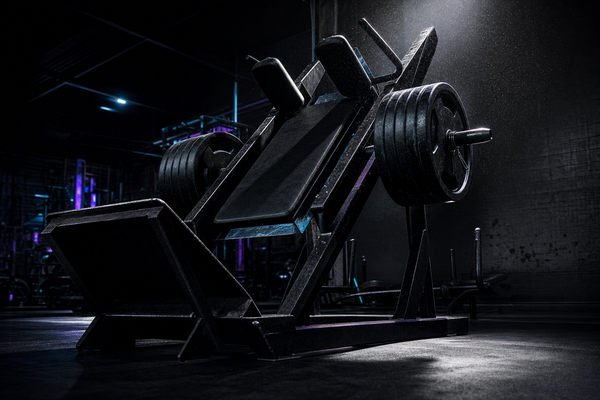
So I Destroyed Legs
Late, in an empty gym, with the kind of focus you only get when the argument is already over.
Legs — the session nobody skips accidentally, because it's the one people skip on purpose. Quads until they stopped cooperating, then a bit past that.
Walking out I felt better than I have after most sessions this month, and it had nothing to do with the training. It was the pure, uncomplicated satisfaction of having lost an argument with yourself and won.
Meanwhile, In the Rest of the House
While I was in the gym, the kids were out getting ready for a pijamada — a sleepover. New pyjamas, a whole operation of stickers and heat-pressed designs, an entire evening of extremely serious logistics about matching sets.
I love this contrast more than any part of the story.
There's a version of the biohacking internet where the protocol is the point — where the man in the ice bath is the whole picture, and the discipline exists to be photographed. That's backwards. The training is the boring, invisible, unglamorous maintenance that happens *so that* the sticker-covered pyjama operation can happen without me being tired, sick, absent, or dead early.
One of us was under a bar. The others were choosing sticker placement. Same project. The bar just doesn't know it.
The Biohacking Footnote, Because This Is Still That Kind of Blog
Now the honest part, because a post that only tells you to push through and never counts the cost is a motivational poster, not a protocol.
Late training has a real, measurable price. Resistance work elevates core temperature and heart rate and suppresses heart rate variability for the following twelve to twenty-four hours — mechanically, with nothing psychological about it. Train at 22:00 and your overnight recovery numbers pay for it while you sleep.
And the afternoon nap is worse than it looks. A long nap late in the day discharges the sleep pressure you need at bedtime. In my own data that pairing is now the most reproducible cause-and-effect relationship I have: late nap in, bedtime pushed hours back, short night out. Every time. Seven documented instances.
Both of those happened yesterday, and my numbers took it on the chin — heart rate up, variability down, a short and expensive night.
Would I do it again? Yes, and without hesitating. A missed session on a day you'd decided to train doesn't cost you one workout — it costs you the *identity*, and identity is the only thing that actually survives a bad week. One suppressed night is a cheap price for not becoming a man who negotiates.
But here's the free win, and it's the actually useful takeaway: none of that cost was necessary. Move the session to morning or midday and you get the whole thing — the discipline, the identity, the legs — with none of the overnight tax. Skip the long afternoon nap or cap it at twenty minutes before 14:00 and your bedtime holds.
The samurai answer isn't "suffer more." It's "stop making it harder than it needs to be, then do it anyway."
疲れても進め
You will be tired. That is not the interesting part; being tired is the default state of any adult carrying anything real. Kids, a company, a body you're rebuilding at 44, a life you're actively defending.
The question was never whether you'd be tired. It's what you've arranged to be true when you're tired — what you've already decided, and who you're doing it for.
Yesterday my answer walked up and hugged me without being asked.
Even if you are tired, keep moving forward.
Related Reading
- Samurai — where the bushidō framing started.
- No Day Off — the streak, and what it's actually protecting.
- Roblox, Legs, Sushi — the leg deep-dive, in full.
- The Bar Doesn't Lie — the other thing that can't be negotiated with.
- The Numbers Came Back — the panel this discipline is actually buying.
- The Sword Goes Back in the Sheath — the other half of the rule - knowing when to stop.
- MONSTER 2.0 — The Blueprint — the six-day program those days belong to.