Ancestral Massage
I walked in a deep-tissue zealot — give me elbows, give me pain, dig out the knots. She barely pressed, and an hour vanished like five minutes. The strongest medicine in the room was the gentlest pair of hands.
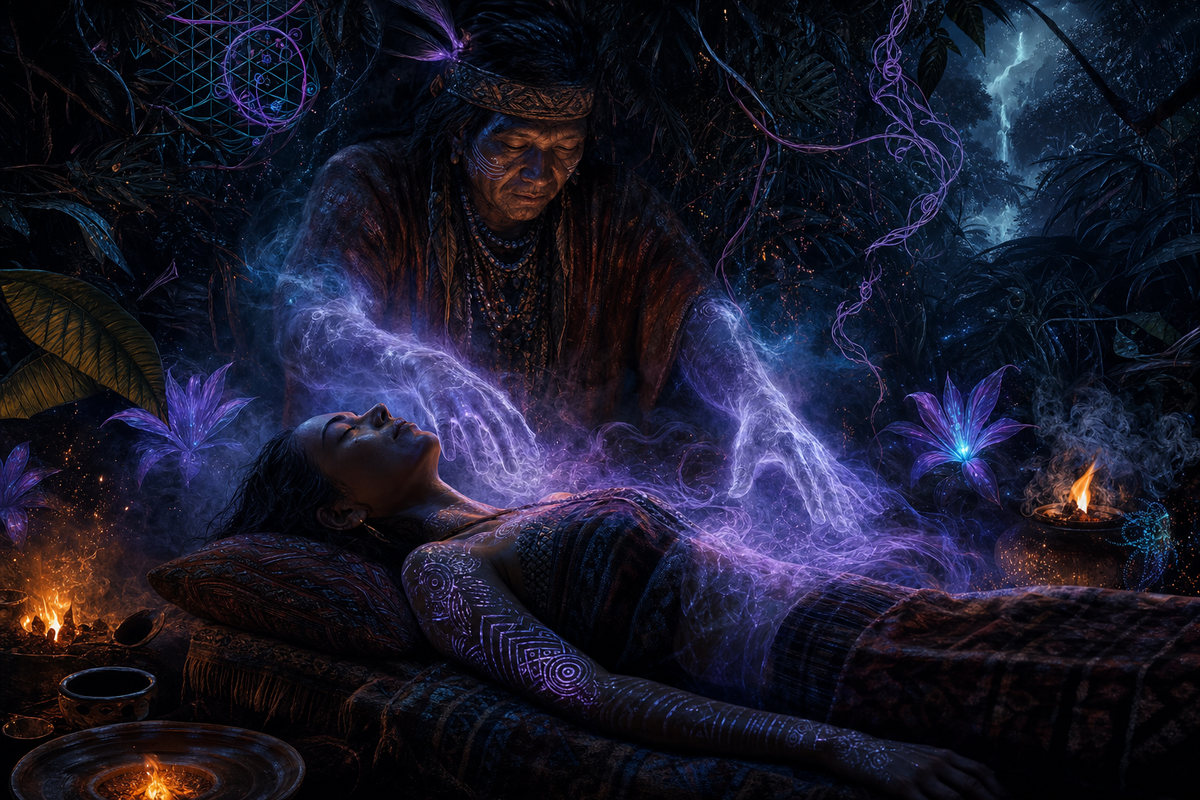
I met her at the gym. She was wrestling with a load that was a little too heavy, I racked it for her, and we started talking. Two minutes in we hit the thing that turns strangers into something else fast: she works with ancestral plant medicine — the real lineage, not the wellness-influencer version. I’ve spent serious time with those plants deep in the Peruvian Amazon. The conversation didn’t feel like small talk. It felt like recognition.
We swapped numbers and met up again, properly, to get to know each other — and that’s when she offered to put me on the table. I’d been hammering the gym and everything else and had quietly let massage slide for weeks. I said yes, happy.
I’m a deep-tissue guy. I was wrong.
Here’s where I expected to be let down. I like brutal deep tissue — elbow in the knot, make it hurt, feel the muscle surrender. Her hands were soft. My honest first thought: this isn’t going to work.
One hour passed like five minutes.
No grinding, no pain — just slow, deliberate, almost weightless touch, and somewhere in there my whole nervous system let go. Every bit of stress drained out of the body and the head at the same time. I got off the table rewired. Mind-blowing is the honest word, and I don’t reach for it often.
Why the gentle version hit harder
It makes sense once you stop thinking like a gym bro. Deep tissue is mechanical — you’re chasing fascia, knots, trigger points. But the bigger lever for recovery isn’t mechanical, it’s the nervous system. Slow, intentional, low-force touch is a direct line into the parasympathetic side — vagal tone up, cortisol down, the body finally dropping out of fight-or-flight. You can’t grind your way into that state. You have to be invited into it.
That’s the ancestral part. Long before percussion guns and sports-massage tables, healing was hands and plants — working straight on the nervous system instead of forcing the tissue. Same family as the medicine we’d bonded over. Old technology. Still undefeated.
Recovery is a protocol, not a reward
The real hit landed after she left. I optimize training, sleep, peptides, hormones, light, food, cold — and I’d let one of the oldest recovery tools on earth go cold because somewhere I’d filed it under luxury. It isn’t a luxury. It’s load management for the nervous system — and the nervous system is the thing that decides whether every other input actually lands.
So it’s on the calendar now. Three times a week. Same status as a training block. No excuses.
Follow-up: the shoulder shot
Quick follow-up to the last one, Protocol Adjustments. I finally ran the BPC-157 injection straight into the shoulder myself — subcutaneous, right by the injury. The move that made it trivial: pinch up a fold of skin (a clip does it, or a second pair of hands), then go in at 45 degrees instead of 90, so you slide under the skin and never reach muscle. First time. Piece of cake.
Protocol Adjustments — the first solo shoulder shot, the Wolverine-stack split, and the Retatrutide step-up.
The Wolverine Stack — BPC-157 + TB-500, and what each one actually does.
The Recharge Protocol — recovery, made a deliberate weekend practice.
BPC-157: One Week, Zero Pain — injecting it straight into the injured shoulder; one week, pain gone, honestly accounted for.
Yoga: The Downshift — the active side of recovery: downshifting the nervous system on purpose.