The City of Eternal Spring
Some places make healthy living feel like another job. Medellín quietly removes half the excuses, opens the windows, and sends you outside — and the climate turns out to be the best biohack I never bought.
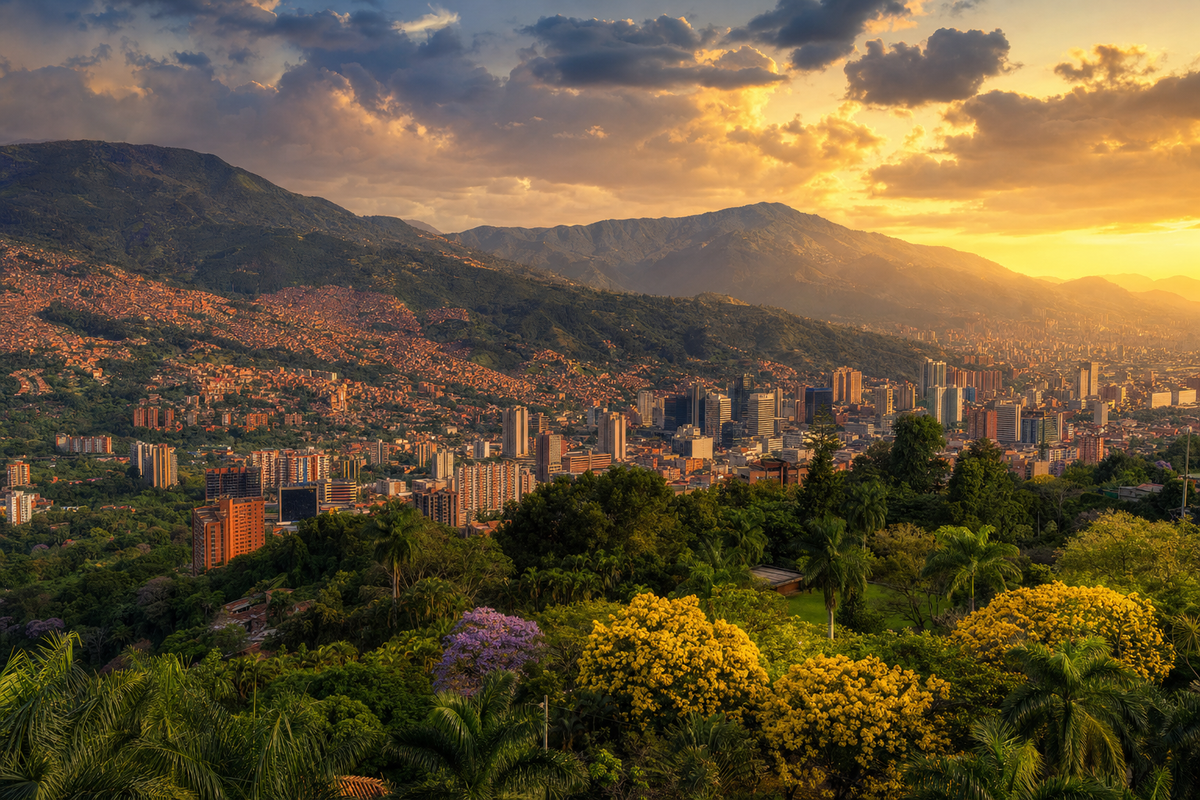
I moved to Medellín twelve years ago, and if you'd asked me why, the climate wouldn't have topped the list. The honest answer was the women, the genuinely warm-hearted people, the nature pressing in from every green hillside, and the Caribbean close enough for a quick escape to the sea. The eternal spring was on the list — it just wasn't the headline.
Twelve years in, it's the thing I'd defend hardest, because Medellín turned out to be the best piece of biohacking infrastructure I've ever lived inside, and nobody had to sell it to me. Here's an afternoon that shows you why:
The eternal spring, by the numbers
They call it La Ciudad de la Eterna Primavera — the City of Eternal Spring — and it isn't marketing. Medellín sits around 1,500 meters up in the Aburrá valley, cradled by green Andes on every side. We're only about six degrees north of the equator, but the altitude keeps the city from becoming the hot, sea-level oven that latitude usually implies.
The average temperature holds near 22°C all year, drifting between roughly 17°C at night and 28°C in the afternoon — and it does that in January exactly like it does in July. There's a tropical-monsoon rhythm, so it rains, sometimes with real enthusiasm, but there's almost no seasonal swing. Better still, the sun keeps banker's hours: about twelve hours of daylight every single day, sunrise and sunset barely moving all year. That last part sounds boring. It's the whole game. This isn't just nice weather — it's infrastructure.
Why the climate is the biohack
Most of what we call biohacking is people fighting their environment. SAD lamps to fake winter sun. Vitamin D capsules because the sky went grey in October. Cooling mattresses and blackout everything to manufacture a stable night. Melatonin to patch a circadian rhythm that daylight saving mugs twice a year.
Medellín just hands you the stable environment. Your body clock runs on light, and here the light schedule never changes — same sunrise, same sunset, same twelve hours, forever. Your cortisol-and-melatonin rhythm gets the cleanest metronome you can imagine, on autopilot. My honest hot take: a rock-steady circadian anchor beats most of the expensive gadgets in the optimization stack — and here it comes included with the rent.
The rest stacks on top. Nights settle near 17°C, almost exactly the 18°C deep sleep likes, so you sleep with the windows open and let the valley handle your thermoregulation — no AC, no heating, ever. The sun shows up daily, so vitamin D and mood stay year-round and seasonal depression has no season to live in. It's spring at all times, so weather never cancels a lift or a run, and the mountains ringing the city are free hill work — with a gentle, chronic altitude nudge at 1,500 meters thrown in, not Everest but a small red-cell edge on sea level. And the markets overflow with tropical fruit and real food year-round, because Colombia is almost unfairly biodiverse.
Recovery in the park
Yesterday was a heavy chest-and-back day — the kind where you're useful for exactly one more thing afterward, and that thing is lying in the grass.
So we did. Sofi, the family, and me: an afternoon that slid into evening in one of the city's green parks. Food, a little painting, a lot of pleasant nothing, the light going gold, nobody in a hurry. If you want the technical version, this is the parasympathetic downshift — after you've asked the nervous system to strain under heavy weight, you give it a clear signal that the threat is over, and it flips from performing to repairing. Nature exposure measurably lowers cortisol; good company does the rest.
If you want the plain version, it was just peaceful. And that's the part no gadget sells you. You can buy a cold plunge. You can't buy an afternoon where the weather, the greenery, and the people all conspire to downshift you at once. Medellín throws that in.
The best biohacks aren't things you buy
So no — moving here was never a biohacking decision. It was the people, the nature, the sea down the road. But the eternal spring turned out to be the quiet, load-bearing one: the environment doing the optimizing so I don't have to. The best biohacks usually aren't things you buy. They're places you live — environments that make the right behavior the default instead of the discipline.
One footnote, because nature insists on balance. While we were out in the park becoming calmer, healthier human beings, Sofi's cats — Charley and Mango — were left to house-sit. They optimized the apartment into a total mess. Eternal spring for us; total anarchy for them. Worth it.
Ten Minutes of Morning Sun — the cheapest circadian hack, and why light timing runs everything.
The Most Biohacked Thing at Ritwal Wasn't the Food — another Medellín evening where the company was the point.
Longevity — Good Company — why the people around you are a longevity input, not a soft one.
Early Risers — how Medellín’s stable sunrise doubles as a circadian anchor.
What a Day! — the life that got built here, on one very good day.
Envigado — the next chapter: buying a house in Envigado.
The Iceman Sent a Plumber — finding real cold in a city that never gets cold.
Krv Nije Voda — Blood Is Not Water — blood is not water — the Serbian half of why this life is here.